
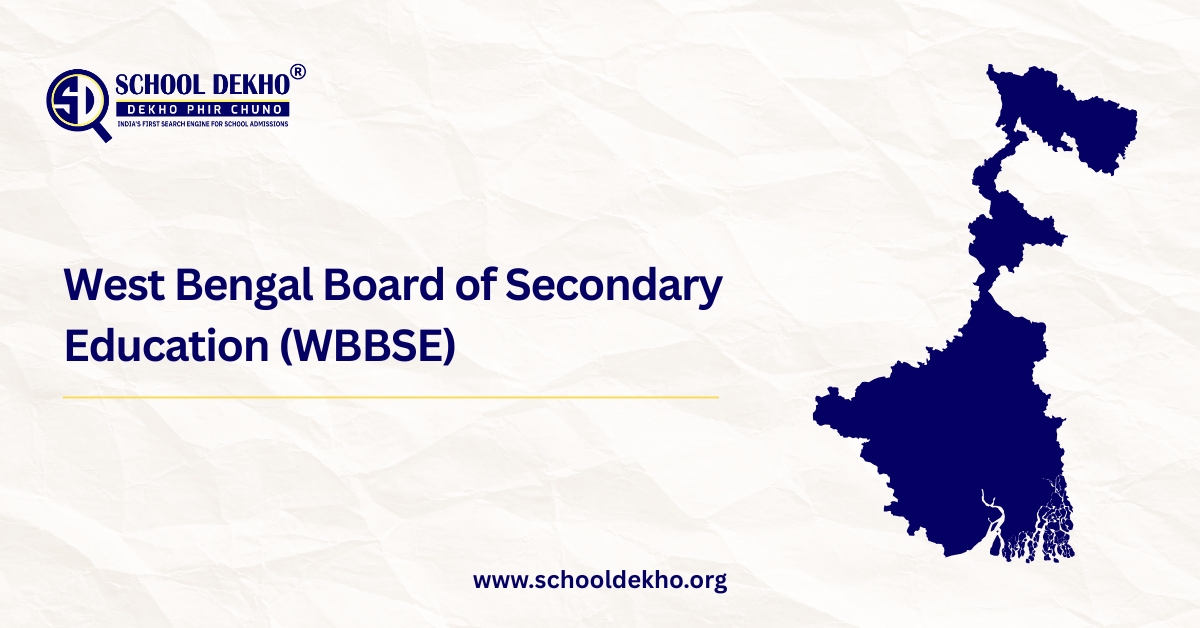
The West Bengal Board of Secondary Education (WBBSE) is the autonomous statutory body responsible for regulating, developing, and conducting secondary education in the state of West Bengal, India. Established as the primary examining authority for Class 10 (secondary level), it administers the Madhyamik Pariksha (Secondary Examination), commonly known as the Madhyamik exam. The board operates under the Department of School Education, Government of West Bengal, and holds the mandate to prescribe curricula, syllabi, and textbooks; grant recognition to schools; and ensure uniform standards across affiliated institutions. With jurisdiction over thousands of schools serving millions of students annually, the WBBSE plays a pivotal role in shaping the foundational education of adolescents aged 14–16 years and bridging elementary and higher secondary stages.
Quick Facts
| Attribute | Details |
|---|---|
| Founded | 1951 |
| Headquarters | Nivedita Bhavan, DJ-8, Sector II, Salt Lake, Kolkata – 700091 (main); Derozio Bhavan, 77/2, Park Street, Kolkata – 700016 |
| Jurisdiction | West Bengal (Class 10 / Secondary level) |
| Type | Autonomous governmental organisation |
| Official Website | wbbse.wb.gov.in |
| Parent Organization | Department of School Education, Government of West Bengal |
| President | Dr. Ramanuj Ganguly |
| Secretary | Subrata Ghosh |
| Primary Examination | Madhyamik Pariksha (SE) |
History and Establishment
The West Bengal Board of Secondary Education traces its origins to the post-independence efforts to reorganise and expand secondary education in the newly formed state of West Bengal. It was formally established in 1951 as a state government-administered autonomous examining authority. The board began operations with the first Madhyamik examination conducted in 1952, when 1,270 schools were affiliated and approximately 42,000 candidates appeared.
The legal framework was strengthened with the West Bengal Board of Secondary Education Act, 1963 (effective from 1964), which provided statutory recognition and defined the board’s powers, functions, and autonomy. This Act replaced earlier provisional arrangements and empowered the board to frame regulations, conduct examinations, and grant recognition to schools. Over the decades, the board expanded significantly. By the early 21st century, the number of affiliated schools had grown to thousands, with candidate numbers rising to 9–10 lakh annually. Regional council offices were established to decentralise administration across zones such as Burdwan, Kolkata, Medinipur, and North Bengal.
Key milestones in the board’s evolution include:
- 1951: Formal establishment and initial affiliation of schools.
- 1952: First Madhyamik Pariksha held.
- 1963: Enactment of the WBBSE Act, granting statutory status.
- 1970s–1990s: Expansion of curriculum to include environmental education and vocational elements; introduction of internal assessment components.
- 2000s: Introduction of digital processes for registration and results.
- 2010s–2020s: Major syllabus revisions aligned with national policies; emphasis on continuous comprehensive evaluation (CCE) and digital initiatives.
- 2020s: Enforcement of strict academic calendars, online portals for student registration (2025–2026 sessions), and measures for examination integrity.
Eminent educationists have served as presidents and secretaries since inception, guiding the board through periods of educational reform, including post-Partition challenges and the integration of diverse linguistic and cultural needs in West Bengal.
Objectives and Functions
The core objectives of the WBBSE, as outlined in its official vision and mission, are to make quality secondary education available, accessible, and affordable to all students aged 10–16 years and to bridge the gap between elementary and higher education through a scientific, systematic, and comprehensive approach.
Key functions and responsibilities include:
- Devising courses of study and prescribing detailed syllabi for Class 9 and 10.
- Conducting the annual Madhyamik Pariksha and other related assessments.
- Granting provisional and permanent recognition (affiliation) to schools meeting prescribed standards.
- Preparing and distributing textbooks or recommending them.
- Regulating examination centres, evaluation processes, and result publication.
- Providing leadership, direction, and support to affiliated secondary schools.
- Promoting teacher training, curriculum development, and educational research.
- Ensuring compliance with state education policies, including equity, inclusion, and environmental awareness.
The board emphasises holistic development, integrating academic rigour with value education, physical education, and awareness of Bengal’s cultural heritage.
Organizational Structure
The WBBSE operates under a hierarchical governance model headed by the President and supported by the Secretary. The structure includes:
- President: Overall policy direction and leadership (currently Dr. Ramanuj Ganguly).
- Secretary: Day-to-day administration and implementation (currently Subrata Ghosh).
- Deputy Secretary (Administration) and other deputies.
- Assistant Secretaries overseeing key sections: Administration, Establishment, Printing & Publication, Academic, Examination, Recognition/Affiliation, Finance, and Legal.
- Regional Council Offices: Four zonal offices (Burdwan Zone, Kolkata Zone, Medinipur Zone, North Bengal Zone) for decentralised handling of school inspections, affiliations, and local grievances.
- Standing Committees: Academic Council, Examination Committee, Recognition Committee, and Finance Committee comprising educationists, government nominees, and board officials.
The board maintains transparency through its official website, which hosts notifications, circulars, and portals for schools and students.
Curriculum and Examination System
The WBBSE curriculum for Classes 9 and 10 is designed to provide a balanced, state-specific education while aligning with national frameworks. It comprises seven compulsory subjects, each carrying 100 marks (90 for theory/external examination + 10 for internal assessment/project/practical):
- First Language (Bengali, English, Hindi, Urdu, Nepali, or others as per medium).
- Second Language (options similar to First Language or alternative languages).
- History (with Environment components).
- Geography (with Environment components).
- Physical Science (Physics + Chemistry + Environment).
- Life Science (Biology + Environment).
- Mathematics.
Syllabus Structure (summary of major units; detailed PDFs available on official website):
- History: Ideas of History; 19th-century Reforms in Bengal; Resistance and Rebellion; Early Collective Action; Alternative Ideas and Initiatives (mid-19th to early 20th century); Peasant, Working Class, and Left Movements; Women’s, Students’, and Marginal Groups’ Movements; Post-Colonial India (1947–1964).
- Geography: Physical features of India and West Bengal; Resources and Development; Human Settlements; Environment and Disaster Management.
- Physical Science: Matter and its properties; Chemical reactions; Force and motion; Work, energy, power; Light, sound, electricity; Environmental issues.
- Life Science: Control and coordination in living organisms; Reproduction; Heredity and evolution; Environment, ecosystems, and biodiversity; Health and diseases.
- Mathematics: Arithmetic, Algebra, Geometry, Trigonometry, Mensuration, Statistics, and Probability.
- Languages: Grammar, comprehension, composition, literature (prescribed texts such as Splendour for English).
Exam Pattern (Madhyamik Pariksha):
- Conducted annually in February (e.g., 2–12 February 2026).
- Duration: 3 hours 15 minutes per paper (15 minutes reading time).
- Question types: MCQs, short answer, long answer, diagrams, and maps (subject-specific).
- Internal assessment: Based on class tests, projects, attendance, and practicals (evaluated by schools).
- Total marks: 700 (7 × 100).
- Grading: 7-point scale (AA to D); divisions based on aggregate (First Division: 480+ marks; Second: 360+; Third: 272+ out of 700/800 depending on optional papers).
- Results declared in May/June; re-evaluation (PPR/PPS) and supplementary exams available.
Evaluation is centralised for theory papers, with strict protocols for question paper setting, printing, and distribution to prevent leaks.
Affiliation and Schools
The WBBSE affiliates government, government-aided, and unaided private schools meeting criteria related to infrastructure, qualified teachers, library facilities, playgrounds, and financial stability. As of recent data, the board oversees approximately 11,000 affiliated schools (up from 1,270 in 1952), serving 9–10 lakh Madhyamik candidates annually.
Affiliation Process:
- Application submitted through District Inspector of Schools (Secondary) to the board.
- Inspection by board officials and DI(SE).
- Provisional recognition followed by permanent recognition after compliance.
- Renewal/extension of recognition required periodically.
- Unaided private schools follow additional guidelines under RTE and court directives.
The board maintains a searchable online School Directory by zone and district.
Digital Initiatives and Reforms
The WBBSE has undertaken significant modernisation:
- Online student registration and enrollment portals (e.g., for 2025–2026 sessions).
- Digital marks capture system for internal assessments.
- Online result publication, admit card download, and PPR/PPS applications.
- School-wise teacher information updates and academic calendar enforcement.
- E-governance for affiliations, transfers, and notifications.
- Integration with state portals like Banglar Shiksha for seamless data flow.
Recent reforms include syllabus updates for Classes 9–10, emphasis on continuous evaluation, and strict academic calendars to ensure timely completion of courses. Technology upgrades (apps and websites) aim at hassle-free services for students and schools.
Achievements and Impact
The WBBSE has contributed substantially to West Bengal’s educational landscape by achieving high enrollment rates, promoting gender parity (female candidates often exceed 55%), and maintaining consistent pass percentages (typically 85–90% in recent years). It has democratised secondary education through Bengali-medium instruction and inclusion of local history and culture. Key statistics include growth from 42,000 examinees in 1952 to nearly one million today, with thousands of schools upgraded over decades. The board’s focus on environmental education and life skills has aligned state education with national goals.
Challenges and Criticism
Like any large examining body, the WBBSE faces challenges such as ensuring examination integrity (occasional reports of malpractices or paper leaks addressed through stringent measures), infrastructure disparities between urban and rural schools, and teacher shortages in certain subjects. Controversies have arisen over question paper content leading to directives for avoiding sensitive topics, and isolated incidents of misconduct at exam centres have prompted suspensions and inquiries. Critics sometimes point to the need for faster digital transformation and greater alignment with competitive national exams. The board responds through continuous policy tweaks, training programmes, and transparency initiatives.
Recent Updates (2021–2026)
- Strict enforcement of 2026 academic calendar and syllabus division for summative evaluations.
- Guidelines for school admissions, transfers, and break-of-study cases.
- Online portals for 2025–2027 registrations and teacher data updates.
- Revised internal assessment frameworks and model question papers.
- Measures for question paper security and avoidance of controversial content in selection tests.
- Alignment of certain elements with NEP 2020 principles while retaining state-specific focus.
- Issuance of minimum age criteria for Madhyamik 2027 and medical fitness protocols for staff.
Comparison with Other Boards
| Aspect | WBBSE | CBSE | ICSE (CISCE) | Other State Boards (e.g., BSEB, UP Board) |
|---|---|---|---|---|
| Focus | State-specific, regional languages (Bengali emphasis) | National curriculum, English/Hindi | Rigorous, English-medium, project-heavy | State-centric, similar to WBBSE |
| Medium | Bengali/English/Hindi options | Primarily English/Hindi | English | Regional languages predominant |
| Exam Pattern | 90 theory + 10 internal | 80 theory + 20 internal (varies) | Detailed, application-based | Similar theory-heavy |
| Syllabus | Local history, environment | Uniform national | Broad, international orientation | Varies; often less detailed |
| Recognition | State + national | National + international | National + international | Primarily state |
| Competitiveness | Strong for state jobs/higher studies | Preferred for engineering/medical entrances | Strong analytical skills | Varies by state |
WBBSE excels in accessibility and cultural relevance but may require supplementary preparation for national-level competitive exams compared to CBSE/ICSE.
FAQs
1. What is the full form of WBBSE?
- West Bengal Board of Secondary Education.
2. What is the official website of WBBSE?
- https://wbbse.wb.gov.in/
3. When is the Madhyamik exam conducted?
- Usually in February every year.
4. How many subjects are there in WBBSE Class 10?
- Seven compulsory subjects.
5. How to download WBBSE syllabus?
- Visit the official website under “Syllabus” or “Curriculum” sections.
6. What is the passing marks for WBBSE Madhyamik?
- Minimum 272 marks aggregate (Third Division) out of 700.
7. How to check WBBSE Madhyamik results?
- Through the official results portal using roll number.
8. What is the affiliation process for new schools under WBBSE?
- Apply via DI(SE) with documents; undergo inspection.
9. Does WBBSE offer vocational courses?
- Limited options; primarily academic stream.
10. How to apply for re-evaluation (PPR/PPS)?
- Online within stipulated dates post-results.
11. What is the age criteria for appearing in Madhyamik?
- Minimum age notified by the board (updated periodically).
12. Are WBBSE marks valid for national competitive exams?
- Yes, recognised by all Indian universities and bodies.
13. How many schools are affiliated to WBBSE?
- Approximately 11,000 across the state.
14. Does WBBSE provide model question papers?
- Yes, released annually on the official website.
15. What are the recent changes in WBBSE exam pattern?
- Emphasis on internal assessment and digital processes; no major shift from 90+10 format.
Conclusion
The West Bengal Board of Secondary Education (WBBSE) remains a cornerstone of secondary education in the state, having evolved from a modest beginning in 1951 into a robust institution serving nearly one million students annually. Through its structured curriculum, transparent examination system, and ongoing digital and pedagogical reforms, the board continues to uphold high standards while addressing contemporary challenges. For the latest updates on syllabus, exams, or affiliations, stakeholders are advised to refer directly to the official website wbbse.wb.gov.in. The WBBSE’s commitment to accessible, quality education ensures it will remain central to West Bengal’s human resource development for decades to come.
See Also: West Bengal Council of Higher Secondary Education (WBCHSE)
.webp)
.webp)