
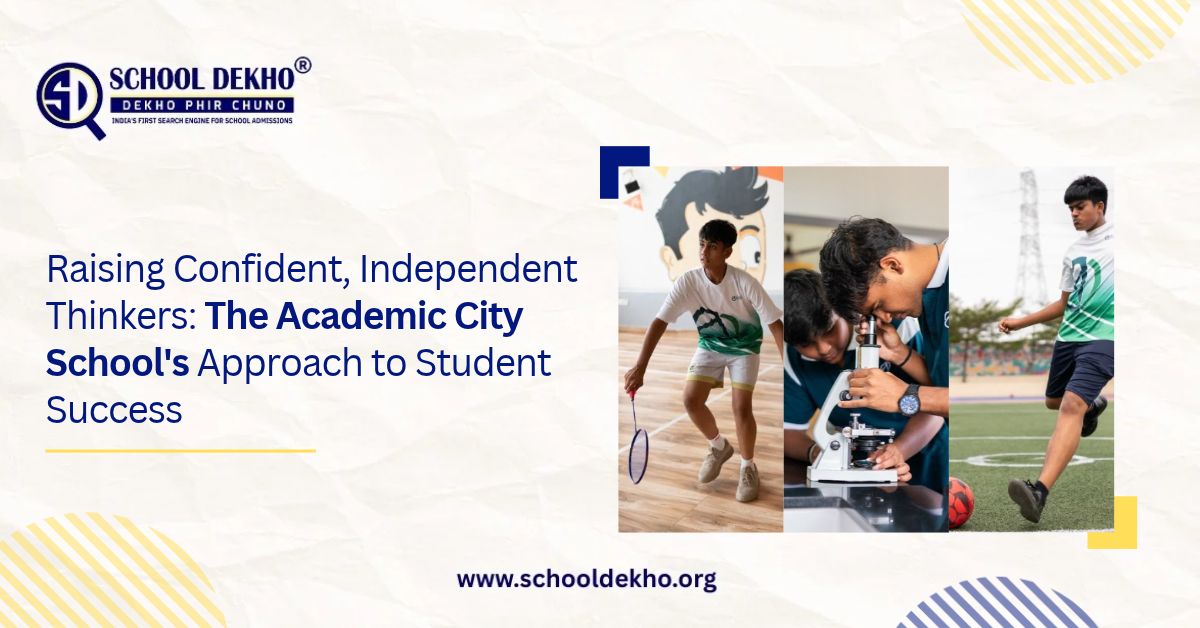
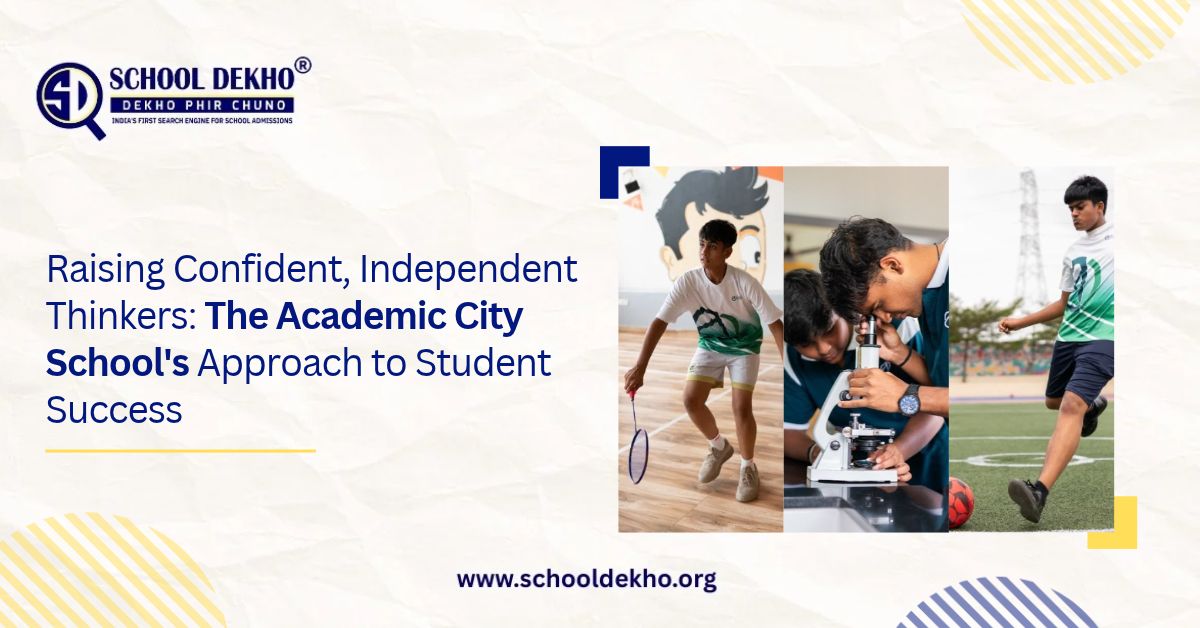
The true measure of a child's education extends far beyond report cards and examination results. It lies in their ability to navigate challenges, make informed decisions, and stand on their own two feet with confidence and integrity. How can schools nurture these essential life skills alongside academic excellence?
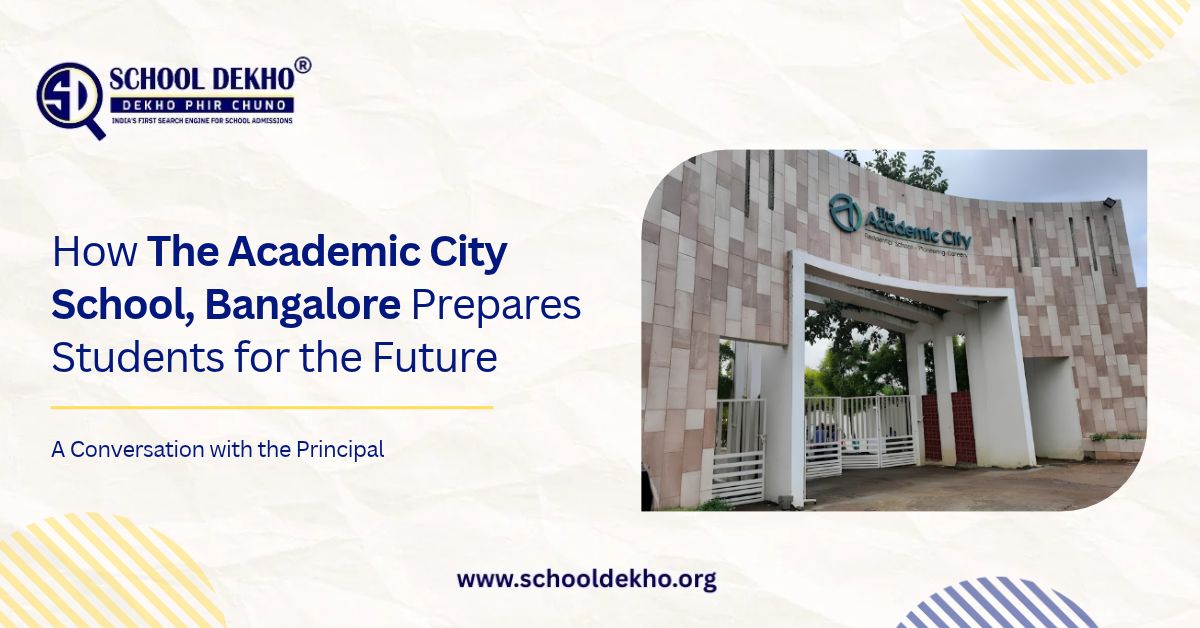
We spoke with A. N. Manikandan, Principal of The Academic City School, Bangalore, to understand their unique approach. As India's first career-oriented boarding school, TACS is dedicated to building not just successful students, but resilient, empathetic, and independent individuals. In this interview, Principal Manikandan shares the school's philosophy on developing character, fostering confidence, and preparing students for the journey of life itself.
01 What qualities do you believe every child should develop to succeed in life, beyond academic achievement?
In my opinion, academic knowledge may open doors, but it is a person's character, attitude, and life skills that help them succeed and sustain that success.
I believe every child should develop the following qualities:
- Integrity and Strong Values: Honesty, respect, empathy, and a sense of responsibility.
- Self-Discipline: The ability to manage time, remain focused, and take ownership of one's actions.
- Confidence and Communication: The courage to express ideas, interact with others, and face challenges.
- Resilience: The ability to accept failures, learn from mistakes, and bounce back with a positive attitude.
- Adaptability: Being open to change, new technologies, new ideas, and continuous learning.
- Leadership and Teamwork: The ability to take initiative, collaborate, respect different perspectives, and lead responsibly.
- Independence and Decision-Making: The confidence to make informed decisions and accept accountability.
As a residential school, TACS has a unique opportunity to nurture these qualities through everyday experiences, shared responsibilities, peer interactions, structured routines, and continuous mentoring.
Personally, I believe that a truly successful child is not necessarily the one who scores the highest marks, but the one who becomes a good human being, can stand independently, respects others, faces challenges courageously, and contributes positively to society.
That is the kind of individual we aspire to nurture at The Academic City School.
02 How does the school encourage students to think independently and make informed decisions?
At The Academic City School (TACS), we encourage students to develop their own perspectives rather than depend entirely on others for answers or decisions. Our aim is to make them confident, responsible, and independent thinkers.
We promote this through classroom discussions, presentations, project-based learning, problem-solving activities, and opportunities to express individual opinions. Career orientation sessions also help students evaluate different options and make informed choices about their future.
Being a residential school gives us an added advantage. Through daily routines, personal responsibilities, peer interactions, house activities, and leadership opportunities, students gradually learn to take ownership of their actions and decisions.
Our mentors and teachers guide them whenever required, but we also allow them the space to think, explore, make mistakes, and learn from their experiences.
Our philosophy is to guide students without making every decision for them. We want them to develop the wisdom to think independently, the confidence to make informed choices, and the maturity to accept responsibility for the consequences.
03 How do you help students build confidence and express their ideas without fear of making mistakes?
At The Academic City School (TACS), we believe confidence develops when children feel accepted, respected, and encouraged. We try to create an environment where every student feels that their voice matters and that making mistakes is a natural part of learning.
We encourage this through:
- Open Classroom Interaction: Students are encouraged to ask questions, share opinions, participate in discussions, and express different viewpoints.
- Public Speaking Opportunities: Debates, presentations, morning assemblies, cultural programmes, and competitions help students overcome hesitation and develop communication skills.
- Positive Mentoring: Teachers and mentors appreciate individual efforts, provide constructive feedback, and encourage students who are hesitant to participate.
- Leadership Responsibilities: House activities, group projects, and event coordination provide opportunities to take initiative and demonstrate their abilities.
- A Supportive Residential Environment: Living together helps students develop friendships, social confidence, mutual respect, and the courage to express themselves.
We also ensure that mistakes are treated as learning opportunities rather than occasions for embarrassment or criticism.
Our message to every student is simple: You do not have to be perfect to participate, and you do not have to know every answer to ask a question. Have the courage to express yourself, the confidence to try, and the willingness to learn.
We want every TACS student to develop a voice of their own and the confidence to use it positively.
04 How does the school teach students to handle failure, setbacks, and academic pressure?
At The Academic City, we believe that failure is not the opposite of success; rather, it is an important stepping stone towards success. As a residential school, we have the advantage of being closely connected with our students throughout the day, which allows us to provide continuous guidance, emotional support, and mentoring.
We follow a holistic and supportive approach through which:
- Positive Mindset: Students are encouraged to view failures and setbacks as learning opportunities rather than reasons for disappointment.
- Continuous Mentoring: Academic Mentors and teachers regularly interact with students, identify their challenges, and guide them towards improvement.
- Individual Attention: Students who face academic difficulties are provided with additional support, doubt-clearing sessions, remedial classes, and personalised guidance.
- Emotional Well-being: Our residential environment ensures that students have access to wardens, mentors, counsellors, and teachers who help them manage stress, anxiety, and academic pressure.
- Building Resilience: Through sports, co-curricular activities, group responsibilities, and daily routines, students learn discipline, patience, teamwork, and the ability to overcome challenges.
- Constructive Feedback: We encourage students to analyse their mistakes, set realistic goals, and work consistently towards improvement rather than compare themselves with others.
Our philosophy is simple: We do not define a student by one examination, one failure, or one setback. We focus on the student's overall growth, confidence, resilience, and ability to bounce back.
Being a residential school, we strive to create a second home where every student feels supported, understood, encouraged, and motivated to become a confident and responsible individual.
05 What steps do teachers take to ensure that every student feels included, respected, and supported?
At The Academic City School (TACS), we believe that every child deserves equal respect, attention, and opportunities, irrespective of their academic performance, background, or individual abilities.
Our teachers and mentors work towards creating a classroom and residential environment where students feel valued and emotionally secure.
Some of our key practices include:
- Individual Attention: Teachers regularly interact with students to understand their academic needs, interests, and personal challenges.
- Equal Opportunities: Every student is encouraged to participate in classroom activities, sports, cultural programmes, and leadership opportunities.
- Respect for Individuality: We encourage diverse opinions, talents, learning abilities, and individual perspectives.
- Mentoring and Counselling: Academic mentors, wardens, and counsellors provide guidance and emotional support whenever needed.
- Positive Teacher-Student Relationships: We encourage open communication so that students feel comfortable approaching teachers without hesitation.
- Safe and Respectful Environment: We promote empathy, inclusiveness, mutual respect, and zero tolerance towards bullying or discrimination.
Being a residential school, we understand that a student's emotional well-being is as important as academic progress. Therefore, continuous observation and interaction are essential parts of our approach.
Our belief is that a child who feels accepted, respected, and supported will naturally develop confidence, a sense of belonging, and a positive attitude towards learning. At TACS, every child matters, and every child deserves an opportunity to grow.
06 How do you encourage students to take responsibility for their learning and personal growth?
At The Academic City School (TACS), we believe that students should gradually move from being dependent learners to becoming self-motivated and responsible individuals. Our focus is to develop a sense of ownership towards both academic progress and personal development.
We encourage this through:
- Self-Study and Time Management: Structured morning and evening preparation sessions help students develop independent study habits and discipline.
- Goal Setting: Students are encouraged to set academic and personal goals, monitor their progress, and work towards improvement.
- Taking Responsibilities: House activities, leadership roles, group assignments, and campus responsibilities teach accountability.
- Self-Assessment: Students are encouraged to identify their strengths, recognise learning gaps, and take corrective steps.
- Mentor Guidance: Regular interactions with teachers and mentors help students reflect on their progress and make better choices.
- Life Skills through Residential Living: Managing daily routines, personal belongings, relationships, and shared responsibilities develops independence and maturity.
Our approach is to provide guidance without creating dependency. We want students to understand that their growth is ultimately their responsibility. At TACS, we strive to develop self-disciplined, accountable, and self-motivated individuals who take ownership of their learning and their future.
07 How does the school help students develop discipline, empathy, and respect for others?
At The Academic City School (TACS), we believe that discipline, empathy, and respect cannot be developed merely through instructions; they must become part of a student's everyday behaviour and lifestyle.
Our residential environment provides a natural platform to inculcate these values through daily experiences.
- Discipline through Routine: Structured daily schedules, study hours, punctuality, personal hygiene, and adherence to school rules help students develop self-discipline.
- Empathy through Shared Living: Living together teaches students to understand different perspectives, support one another, share responsibilities, and respect individual differences.
- Respect through Relationships: Regular interactions with teachers, mentors, wardens, support staff, and peers help students understand the importance of dignity and mutual respect.
- Responsibility and Accountability: House activities, teamwork, and assigned duties encourage students to take ownership of their actions.
- Values-Based Guidance: Morning assemblies, mentoring sessions, counselling, and everyday conversations reinforce ethical behaviour and positive attitudes.
We also believe that teachers and school leaders must lead by example, as children learn values more effectively through observation than instruction.
Our objective is to develop students who are disciplined not out of fear, but through self-realisation; empathetic not out of obligation, but through understanding; and respectful not merely because rules demand it, but because they recognise the dignity of every individual.
08 What role do sports, extracurricular activities, and collaborative projects play in developing life skills?
At The Academic City School (TACS), we consider sports and extracurricular activities an essential part of education, not merely recreational engagements. They provide practical opportunities for students to develop qualities that classroom teaching alone cannot fully nurture.
Through these activities, students learn:
- Sports: Discipline, teamwork, perseverance, leadership, healthy competition, and the ability to accept both victory and defeat gracefully.
- Arts and Cultural Activities: Creativity, self-expression, confidence, and appreciation of different talents and cultures.
- Collaborative Projects: Communication, cooperation, critical thinking, problem-solving, and shared responsibility.
- Competitions and Events: Time management, decision-making, taking initiative, and performing under pressure.
- Residential and House Activities: Adjustment, interpersonal relationships, mutual support, and a sense of belonging.
We encourage students to participate beyond their comfort zones, explore different interests, and discover their abilities through experience.
At TACS, we believe that the playground teaches teamwork, the stage builds confidence, and collaborative activities teach responsibility. These experiences help transform students into socially confident, emotionally balanced, and capable individuals who are prepared for real-life challenges.
09 How can parents help children become more independent without putting unnecessary pressure on them?
At The Academic City School (TACS), we believe that independence develops through trust, encouragement, and gradual responsibility, not through pressure or unrealistic expectations.
Parents can support this development in a few simple ways:
- Allow Age-Appropriate Responsibilities: Encourage children to manage their belongings, daily routines, and personal tasks independently.
- Encourage Decision-Making: Give them opportunities to make small decisions and understand the consequences of their choices.
- Appreciate Efforts, Not Just Results: Recognise improvement, sincerity, and hard work rather than focusing only on marks and achievements.
- Avoid Comparisons: Every child has a different pace, potential, and area of excellence.
- Allow Them to Make Mistakes: Instead of immediately intervening, give children the opportunity to learn, reflect, and find solutions.
- Maintain Emotional Connection: Regular phone conversations should provide reassurance, positivity, and encouragement rather than becoming an additional source of academic pressure.
As a residential school, we also encourage parents to trust the school's mentoring system and allow children sufficient space to adjust, explore, and grow.
My message to parents is simple: Be a support system, not a pressure system. Give children roots through values, wings through independence, and confidence through unconditional encouragement.
10 What is your vision for the kind of individuals students should become by the time they pass out from The Academic City School?
My vision for every student graduating from The Academic City School (TACS) is to see them emerge as confident, independent, responsible, and career-oriented individuals who are prepared to face the world with clarity and purpose.
I would like every TACS graduate to possess five essential qualities:
- Academic Competence: Strong subject knowledge, critical thinking, and the ability to apply learning in real-life situations.
- Career Clarity: An understanding of their strengths, interests, and career opportunities, enabling them to make informed future choices.
- Strong Character: Integrity, empathy, discipline, respect, and a sense of social responsibility.
- Independence and Resilience: The confidence to make decisions, overcome setbacks, adapt to change, and take ownership of their lives.
- Global Competence: Effective communication, technological awareness, leadership, teamwork, and the ability to work in a diverse and changing world.
Most importantly, I want our students to remain grounded in Indian values while developing a global outlook.
As Principal, my vision is not simply to see students leave TACS with excellent academic results or admission to prestigious institutions. I want them to leave with a clear sense of identity, direction, confidence, and purpose.
If a student graduates from TACS knowing who they are, what they want to become, how to face challenges, and how to contribute positively to society, I would consider that our true educational success.
Conclusion: Building Character for a Lifetime of Success
The insights shared by Principal A. N. Manikandan paint a compelling picture of an institution that prioritises the holistic development of every child. The Academic City School's approach is a thoughtful blend of structure and freedom, guiding students to become self-reliant while providing the support they need to thrive. From fostering resilience and independent thinking to cultivating empathy through shared living, TACS has created an ecosystem where life skills are not just taught but lived every day.
The emphasis on treating mistakes as learning opportunities, encouraging self-advocacy, and building character through real-world experiences sets TACS apart. By focusing on the qualities that truly matter—integrity, adaptability, and a sense of responsibility—The Academic City School is preparing its students not just for their next examination, but for the challenges and opportunities of a lifetime. For parents seeking a school that will partner with them in raising confident, independent, and grounded individuals, TACS offers a powerful and inspiring roadmap.


.webp)