
Outdoor adventure camps provide students the unique chance to break away from their standard classroom activities and learn, engage, and evolve in different ways. Nature immersion can awaken the curiosity of young minds, motivate them to take on physical tasks, and foster deeper peer relationships.
These experiences are not only fun but also serve a greater purpose by turning students into more assured, independent individuals who are more comfortable facing unfamiliar situations.
 Learning Beyond the Classroom
Academic knowledge in the classroom is fundamental, yet certain important lessons are better taught through hands-on learning. The outdoor camps give the students challenges that cultivate their problem-solving abilities, communication, and creativity.
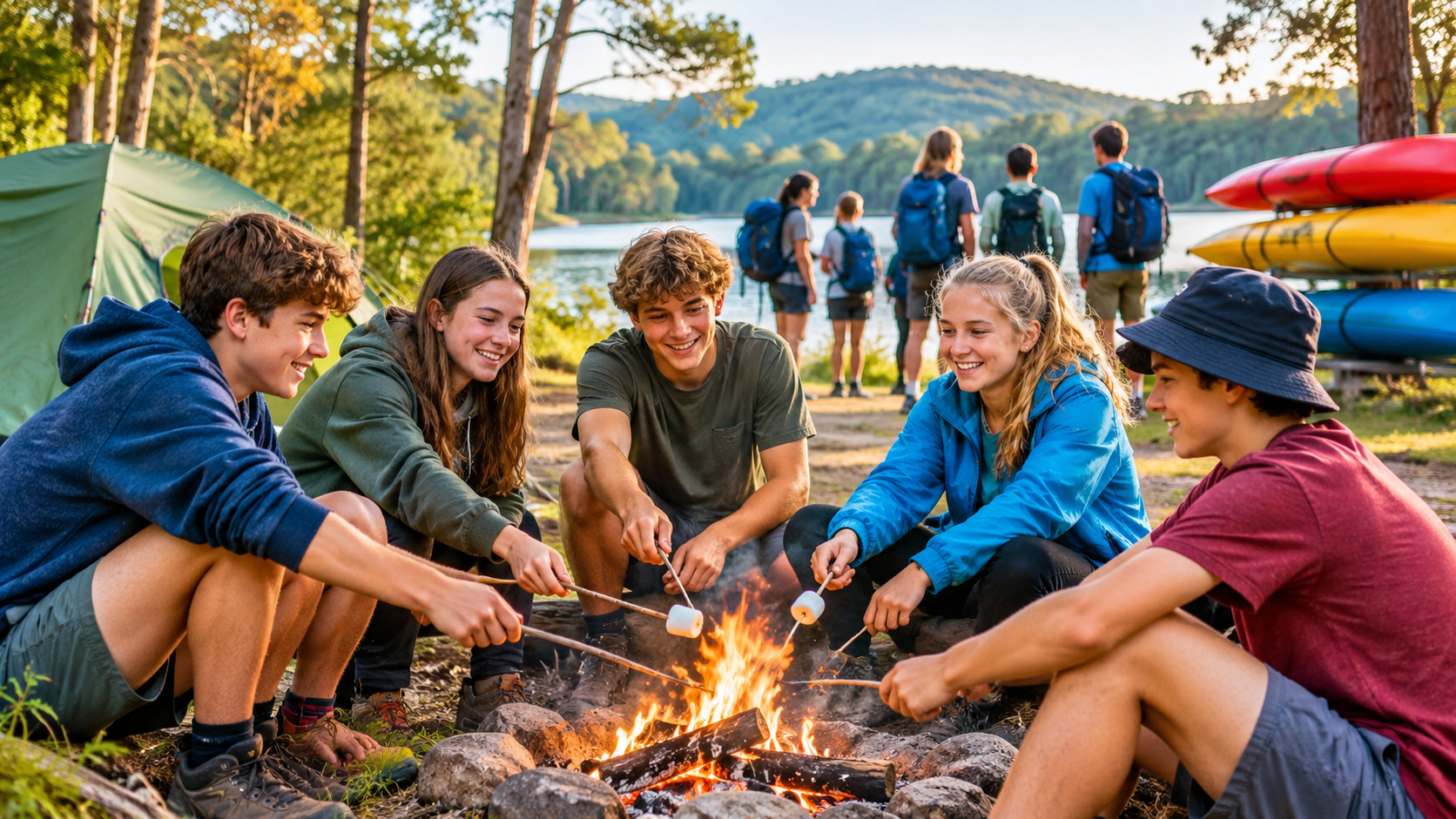
The students may be engaged in activities like kayaking, archery, bushcraft, and rock climbing that introduce them, in a way, to entirely new worlds. While learning from the instructor students are also picking up skills that show them the importance of teamwork, goal setting, instructions following. With these experiences, students may well be able to pinpoint their talents and passions that might never have shown up in a classroom setting.
Building Confidence and Teamwork
One of the highlights of outdoor adventures is building student confidence. Trying something unfamiliar can initially feel challenging. When a person successfully completes an unknown activity they are likely to feel proud and happy.
Group tasks also promote teamwork. Through this, students understand the value of diverse opinions, how to give and take support, and how to collaborate towards a shared objective. These abilities can improve the way friends feel about their interactions, and the general classroom climate once they come to school.
Enjoying Nature and Staying Active
Getting out among natural surroundings is a great way to be away from all-day screen time. Hiking through bushland, having quality time by the water, and joining in some physical play can help students learn about the natural environment and stay active at the same time.
An action camp can provide excitement, time to recharge, get social, and be outdoors. Also, a diverse list of activities allows students with different interests and confidence levels to enjoy whatever suits them.
Choosing the Right Outdoor Camp
Camp teachers need to decide about the accommodation, the kind of activities provided, the level of instructors, how safety is being managed, and if and how students have particular needs. The schedule of the camp should reflect that they want to have an exciting but also comfortable and supervised environment and provide for personal growth.
The Great Aussie Bush Camp is an option that schools interested in structured outdoors activities might consider. The camp runs its adventure programs in several places in New South Wales, Victoria, and Queensland. A range of different activities and the fact that they can make the programmes to the students’ tastes means that students will have a chance to develop themselves in terms of cooperating with the others, gaining self-confidence, and creating lasting friendships.
Final Thoughts
A school outdoor camp has many other aspects besides the chance to escape the classroom. It can be a time for the students to do some self-testing, pick up some important people skills, become more environmentally aware, and have great times with their schoolmates. By being creative in the preparation and selecting the right activities, a group trip can be a significant event that will positively influence the students after they are back in the classroom.







.webp)