
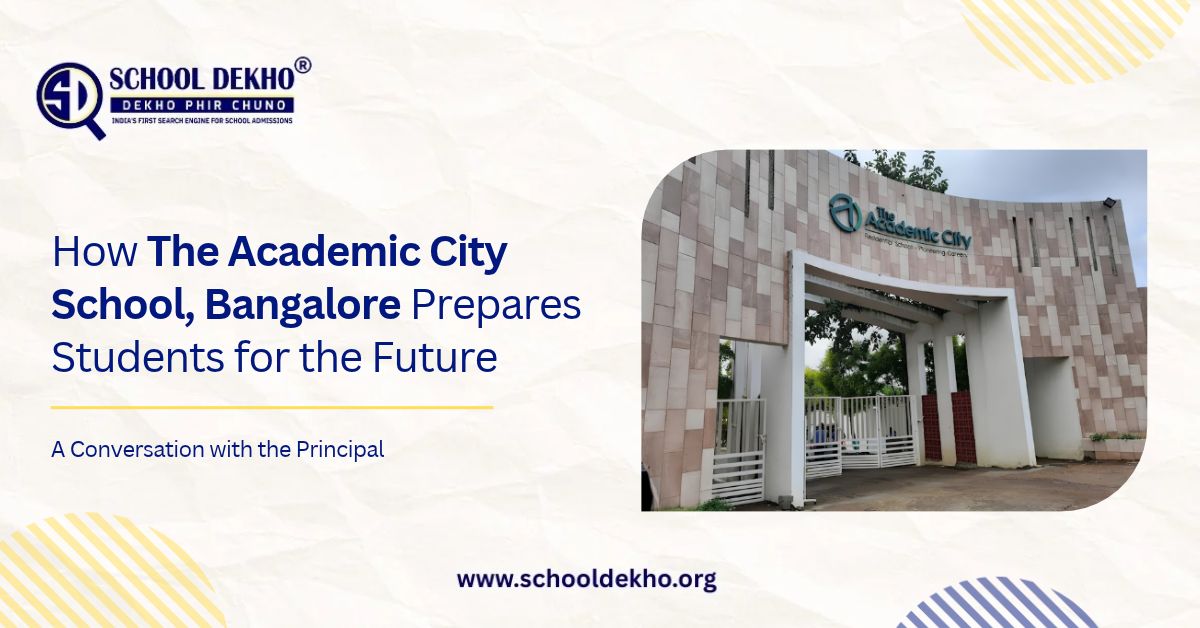
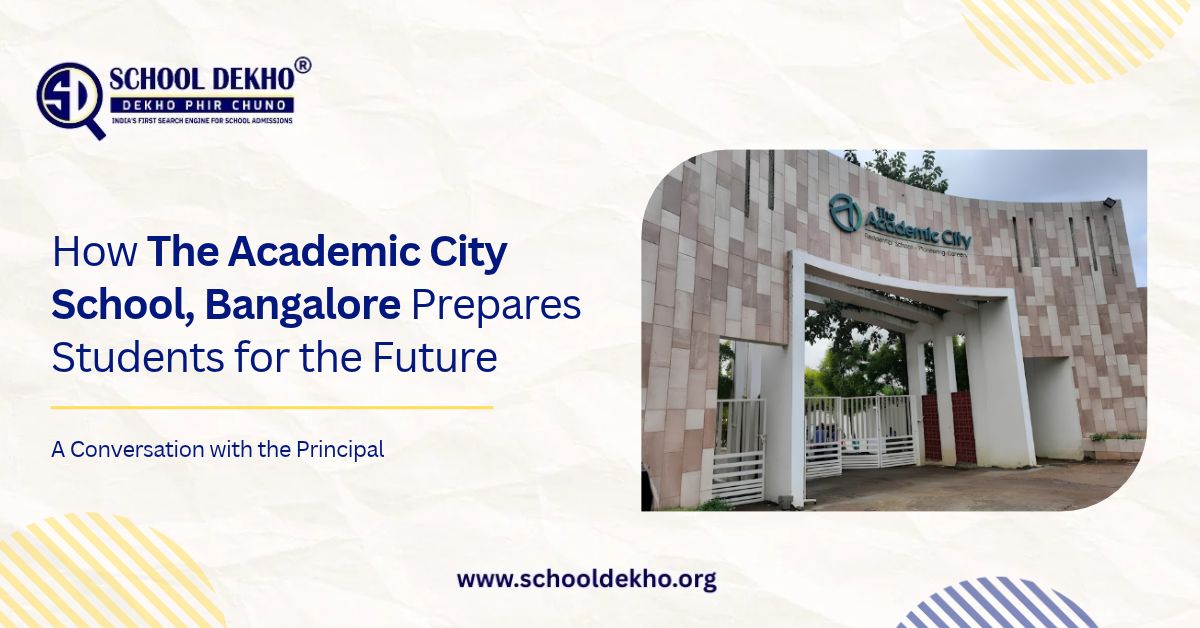
In an era where the future of work is being reshaped by technology and unpredictable change, the purpose of education is undergoing a profound transformation. The goal is no longer just to impart knowledge, but to cultivate adaptability, character, and a clear sense of direction. To understand how leading institutions are adapting, we spoke with A. N. Manikandan, Principal of The Academic City School, Bangalore.
As India's first career-oriented boarding school, TACS is challenging conventional educational models. In this exclusive interview, Principal Manikandan delves into the school's unique philosophy, its methods for nurturing well-rounded individuals, and how it is preparing students not just for examinations, but for life itself.
01 What is the educational philosophy of The Academic City School, and how does it shape students' learning experiences?
The educational philosophy of The Academic City School (TACS) is founded on the belief that education must go beyond textbooks, examinations, and academic achievements. As India's first career-oriented boarding school, TACS believes that 15 years of traditional education alone may not be sufficient to prepare students for the dynamic and competitive world they are going to enter.
Our philosophy is to create a learning environment that combines academic excellence, career awareness, character development, and holistic growth. We aim to help every student discover their interests, recognise their strengths, explore future career possibilities, and develop the confidence to pursue their aspirations.
This philosophy is reflected in our students' learning experiences through five key approaches:
- Academic Rigour: We maintain a strong academic foundation through the CBSE curriculum, conceptual understanding, disciplined study habits, critical thinking, and consistent academic mentoring.
- Career-Oriented Learning: We expose students to different career pathways, professional opportunities, aptitude development, and future-oriented skills so that they can make informed decisions about their future.
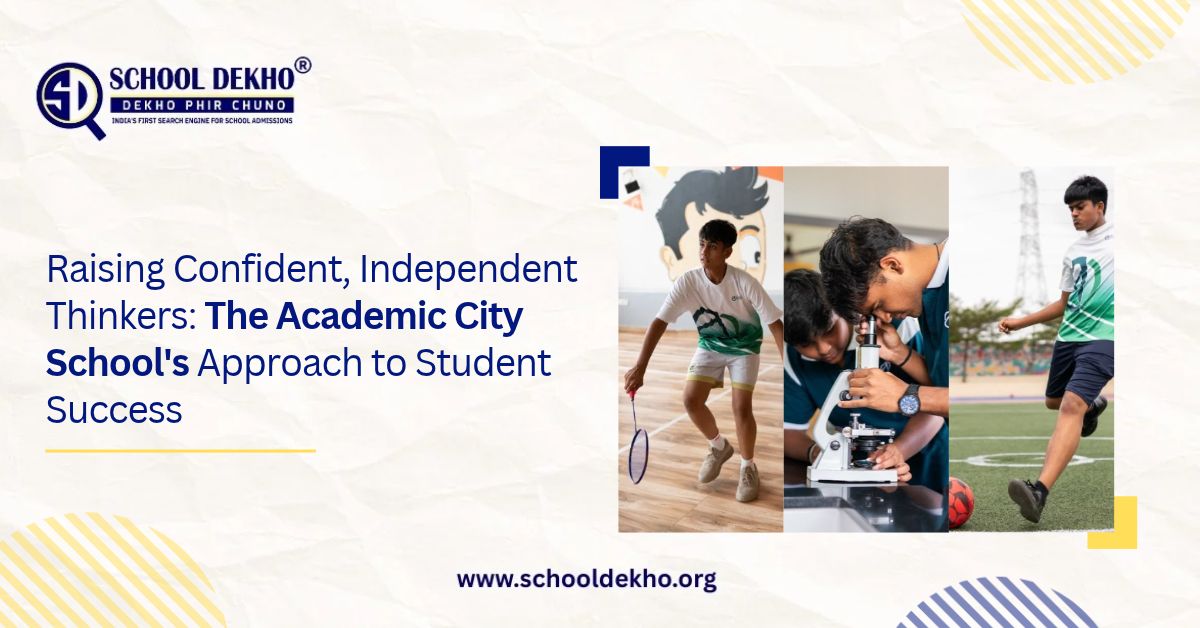
- Holistic Development: Equal importance is given to sports, arts, music, dance, leadership, communication, teamwork, and other co-curricular experiences.
- Values and Global Outlook: We integrate Indic values, ethics, discipline, respect, and responsibility with a global perspective, preparing students to become culturally rooted yet globally competent citizens.
- Residential Learning Experience: Our boarding-school environment provides opportunities for learning beyond classroom hours. Through structured routines, mentoring, peer interaction, self-study, group activities, and daily responsibilities, students develop independence, resilience, time management, and social skills.
Our Vision is to be a centre of educational excellence that nurtures holistic growth and enables every student to discover and develop their unique potential.
Our Mission is to empower students with future-ready skills and strong character, preparing them to thrive in a rapidly evolving world while remaining firmly grounded in ethical values.
Ultimately, at The Academic City, we do not aspire merely to produce students who score well in examinations; we aspire to nurture young individuals who know themselves, understand their opportunities, have clarity of direction, and possess the knowledge, skills, values, and confidence to succeed in life.
That is what makes the TACS educational philosophy distinctive: Education with Direction, Learning with Purpose, and Growth with Values.
02 How do you balance academic excellence with practical learning and overall student development?
At The Academic City School (TACS), we believe that academic excellence and overall personality development must go hand in hand. Our approach is not to make students academically successful at the cost of other important life skills, but to create a balanced environment where knowledge, skills, values, and practical experiences complement one another.
As a career-oriented residential school, we achieve this balance through the following approaches:
- Strong Academic Foundation: We follow the CBSE curriculum with a focus on conceptual clarity, critical thinking, analytical abilities, regular assessments, doubt-clearing sessions, and individual academic mentoring.
- Career-Oriented Exposure: We encourage students to explore different professional pathways through career guidance, aptitude development, interactions, and exposure to emerging career opportunities. This helps them connect classroom learning with real-world aspirations.
- Learning Beyond Classrooms: We integrate project-based learning, presentations, group discussions, experiments, activities, practical assignments, and collaborative tasks to develop the ability to apply theoretical knowledge in real-life situations.
- Sports and Co-curricular Activities: Students are encouraged to participate in sports, arts, music, dance, cultural programmes, and other activities. These experiences develop teamwork, leadership, discipline, creativity, and confidence.
- Residential Learning and Life Skills: Our boarding environment provides learning opportunities throughout the day. Students develop independence, time management, interpersonal relationships, self-discipline, responsibility, and adaptability through structured routines and shared responsibilities.
- Emotional and Social Development: Through continuous interaction with teachers, mentors, wardens, and counsellors, we focus on emotional well-being, communication skills, positive relationships, and the ability to handle challenges.
- Values-Based Education: We ensure that academic and practical learning are supported by ethical values, respect, empathy, integrity, and a sense of responsibility towards society.
Our fundamental belief is that education should prepare a child not only to answer questions in an examination but also to face questions and challenges in life.
At TACS, we therefore strive to create a balanced ecosystem where academics provide the foundation, practical learning develops competence, career orientation provides direction, and residential life builds character.
Our ultimate goal is to develop well-rounded, career-aware, confident, responsible, and future-ready individuals who are prepared not just for examinations, but for life.
03 How does the school encourage critical thinking, creativity, and problem-solving among students?
At The Academic City School (TACS), we believe that students should not be trained merely to remember information; they should be encouraged to question, analyse, experiment, innovate, and arrive at their own conclusions.
Our approach is to gradually shift students from learning what to think towards learning how to think.
We encourage these abilities by creating opportunities where students actively participate in the learning process rather than remain passive recipients of knowledge.
- Question-Based Learning: Teachers encourage students to ask questions, express different viewpoints, challenge assumptions, and participate in meaningful classroom discussions.
- Experiential Learning: Through science experiments, mathematical applications, projects, presentations, case studies, and practical assignments, students learn to connect theoretical concepts with real-life situations.
- Creativity and Innovation: We provide platforms through art, craft, music, cultural activities, model-making, competitions, and project work where students can express original ideas and explore their creative potential.
- Problem-Solving Approach: Students are encouraged to analyse situations, identify challenges, consider alternative solutions, work collaboratively, and take informed decisions rather than depend entirely on ready-made answers.
- Career-Oriented Exposure: Since TACS is a career-oriented school, we encourage students to understand real-world challenges and explore how academic knowledge can be applied in different professional fields.
- Residential Environment as a Learning Platform: Our boarding environment itself offers valuable opportunities to develop these skills. From managing daily responsibilities and resolving peer-related issues to organising activities and working in teams, students learn decision-making, negotiation, adaptability, and leadership through everyday experiences.
We also encourage students to learn from mistakes. We want them to understand that an idea that does not work is not necessarily a failure; it can be the beginning of a better solution.
At TACS, our intention is to develop independent thinkers, creative minds, and confident problem-solvers. We want our students to graduate not simply with answers to existing questions, but with the ability and courage to ask new questions, explore possibilities, and create solutions for tomorrow's world.
04 What teaching methods do you use to help students understand concepts rather than simply memorise them?
At The Academic City School (TACS), our emphasis is on conceptual understanding rather than rote learning. We believe that true education happens when a student understands the logic behind a concept, can explain it in their own words, and is able to apply that knowledge in unfamiliar situations.
Our teaching-learning practices are aligned with the evolving vision of NEP 2020, the National Curriculum Framework for School Education (NCF-SE), and CBSE's competency-based education approach.
We focus on making classroom learning more interactive, application-oriented, and student-centred.
Some of the key practices include:
- Experiential and Activity-Based Learning: Wherever possible, concepts are introduced through experiments, demonstrations, activities, models, and practical experiences so that students learn by doing.
- Competency-Based Teaching: In line with CBSE guidelines, we focus on understanding, application, analysis, logical reasoning, and problem-solving rather than simply preparing students to reproduce textbook content.
- Inquiry and Discussion-Based Learning: Teachers encourage students to ask questions, participate in discussions, analyse situations, and develop their own understanding of concepts.
- Application-Oriented Assessments: We progressively incorporate case-based questions, source-based questions, real-life situations, analytical questions, and competency-based questions in classroom assessments, keeping CBSE board examination expectations in view.
- Integration Across Subjects: We encourage interdisciplinary learning wherever relevant, helping students understand how concepts from Science, Mathematics, Social Science, Languages, and other disciplines connect with one another.
- Technology-Enabled Learning: Digital resources, presentations, simulations, and visual learning tools are used wherever appropriate to simplify complex concepts and make learning more engaging.
- Continuous Assessment and Feedback: Regular worksheets, class tests, assignments, oral interactions, and doubt-clearing sessions help teachers identify learning gaps and provide timely academic support.
The NEP 2020 vision of moving from rote learning towards critical thinking, creativity, experiential learning, and competency development is an important guiding principle for us. We also recognise the NCF-SE emphasis on meaningful learning, flexibility, and connecting knowledge with real-life experiences.
As a residential school, we have an additional advantage: learning does not end when classroom hours are over. Supervised study sessions, academic mentoring, peer discussions, practical activities, and doubt-clearing opportunities reinforce classroom concepts.
Ultimately, our objective is that every student should be able to understand a concept, explain it confidently, apply it independently, and connect it to the world around them. We want students to learn for life, not merely for examinations.
05 How does the school identify and nurture each student's individual strengths and interests?
At The Academic City School (TACS), we believe that every child is unique, with different abilities, interests, and aspirations. Our focus is to identify these individual strengths and provide the right opportunities to nurture them.
We achieve this through:
- Continuous Observation: Teachers and mentors observe students' academic performance, classroom participation, behaviour, and individual interests.
- Multiple Exposure: Sports, arts, music, dance, cultural activities, competitions, and leadership opportunities help identify hidden talents.
- Career Exploration: Aptitude development and career guidance help students recognise their strengths and explore suitable future pathways.
- Personal Mentoring: Regular interaction with academic mentors, wardens, and teachers helps us understand each student's progress and provide individual encouragement.
- Residential Learning: The boarding environment provides additional opportunities to observe students' leadership, teamwork, creativity, independence, and social skills.
Our belief is that every child has the potential to excel, but not necessarily in the same area. At TACS, we strive to discover that uniqueness and provide the platform, guidance, and confidence needed to transform individual potential into achievement.
06 How do you support students who struggle academically or need additional learning assistance?
At The Academic City School (TACS), we believe that no student should be left behind because of academic difficulties. We follow a supportive and structured approach to identify learning gaps and provide timely assistance.
Our support system includes:
- Extra Classes: Additional academic sessions are organised for students who need more time and guidance to understand concepts.
- Doubt-Clearing Sessions: Dedicated sessions help students clarify subject-related difficulties and strengthen conceptual understanding.
- Online Learning Support: Online classes and digital learning resources are used wherever required to provide additional academic exposure and reinforcement.
- Individual Attention: Teachers and Academic Mentors monitor students' progress and provide focused guidance based on their learning needs.
- Regular Assessments: Periodic tests and performance reviews help identify weak areas and track improvement.
- Peer Learning: Collaborative study and peer discussions encourage students to learn from one another.
Being a residential school gives us an added advantage, as academic support can be extended beyond regular classroom hours through supervised study and mentoring.
Our approach is not to label students as weak or slow learners, but to identify where they need support, provide the right intervention, and help them progress with confidence.
07 What opportunities do students have to develop leadership, communication, teamwork, and decision-making skills?
At The Academic City School (TACS), we believe that leadership and life skills cannot be developed through classroom teaching alone; they must be practised in everyday life.
Our residential environment provides students with several opportunities to take initiative, interact with peers, share responsibilities, and learn from experiences.
Students develop these skills through:
- Leadership Opportunities: Student councils, house responsibilities, event coordination, and organising school activities.
- Communication Skills: Debates, public speaking, presentations, group discussions, and cultural programmes.
- Teamwork: House competitions, sports, group projects, and collaborative activities.
- Decision-Making: Assigning responsibilities, solving everyday challenges, managing group activities, and taking ownership of tasks.
- Residential Life: Living together, respecting different perspectives, managing responsibilities, and resolving peer-related issues help students develop interpersonal skills and maturity.
We also encourage students to learn from their decisions, accept responsibilities, and understand the importance of accountability.
Our objective is to ensure that students do not merely learn about leadership but experience it. We want every TACS student to develop the confidence to express, the ability to collaborate, the courage to take decisions, and the maturity to lead responsibly.
08 How does the school prepare students for a future shaped by technology, artificial intelligence, and changing career opportunities?
At The Academic City School (TACS), we understand that the future of work is evolving rapidly, and today's students need to be prepared for careers that may not even exist yet. Our focus is therefore on developing adaptability, technological awareness, critical thinking, and career readiness.
We prepare our students through:
- Career Orientation Sessions: Regular career guidance and orientation sessions conducted by Luminary RP's help students understand emerging career opportunities, professional pathways, industry expectations, and changing job trends.
- Technology Integration: We encourage the meaningful use of digital tools and technology in teaching and learning.
- AI and Digital Awareness: Students are encouraged to understand emerging technologies, artificial intelligence, their applications, opportunities, and responsible usage.
- Future-Ready Skills: Critical thinking, creativity, communication, collaboration, and problem-solving are integrated into the learning experience.
- Career Exploration: Students are exposed to different professional fields so they can identify their interests and make informed career choices.
Our vision is not simply to prepare students for existing careers, but to equip them with the knowledge, skills, confidence, and adaptability to succeed in an unpredictable future. We want TACS students to be technology-aware, ethically responsible, and future-ready individuals who can embrace change rather than fear it.
09 How can parents support their children's learning and development beyond the classroom?
At The Academic City School (TACS), we consider parents important partners in a child's educational journey. Although students stay on campus in our residential environment, parental involvement continues to play a significant role in their emotional well-being, motivation, and overall development.
Parents can contribute by:
- Regular Communication: Maintaining regular phone conversations with their children, offering encouragement, listening patiently, and understanding their experiences.
- Positive Reinforcement: Inculcating positive thoughts, confidence, resilience, and a healthy attitude towards learning and challenges.
- Appreciating Efforts: Recognising children's progress and achievements rather than focusing only on examination results.
- Trusting the Residential Ecosystem: Working in coordination with teachers, mentors, and wardens and reinforcing the school's values and routines.
- Encouraging Independence: Allowing children to take responsibility, make decisions, and learn from their experiences rather than solving every problem for them.
We also encourage parents to maintain constructive communication with the school so that any academic, emotional, or developmental concerns can be addressed collectively.
Our belief is that a child flourishes best when the school provides the right environment on campus and parents provide consistent encouragement, trust, and emotional strength from home. Education is most effective when parents and school work as one team.
10 What would you like parents to know about The Academic City School when considering it for their child's education?
I would like parents to understand that The Academic City School (TACS) is not just a school; it is a learning and living ecosystem designed to prepare children for life beyond school.
As India's first career-oriented boarding school, our focus extends beyond academic results to career awareness, character building, discipline, independence, and holistic development.
A few things I would particularly like parents to know are:
- Academic Mentoring: Every child's academic journey is supported through continuous guidance, monitoring, and mentor reviews.
- Career-Oriented Education: We provide exposure to different career opportunities to help students develop clarity about their future.
- Residential Care: Our structured boarding environment aims to provide a safe, disciplined, supportive, and nurturing atmosphere.
- Holistic Development: Equal importance is given to academics, sports, co-curricular activities, life skills, and personality development.
- Parent and Alumni Feedback: We encourage prospective parents to interact with existing parents, alumni, and students and understand their experiences and reviews of the school.
- Continuous Improvement: We believe in listening to feedback from students, parents, and mentors to continuously strengthen our educational ecosystem.
My message to parents would be: Do not choose a school only by looking at its infrastructure or examination results. Look at the environment it creates, the values it nurtures, the attention it gives to each child, and the direction it provides for the child's future.
At TACS, we aspire to ensure that every child leaves the campus not just with a certificate, but with confidence, character, career awareness, independence, and a clear direction in life.
We are not merely preparing children for their next examination; we are preparing them for their next stage of life.
Conclusion: Education with Direction, Learning with Purpose
The conversation with Principal A. N. Manikandan reveals a school that is thoughtfully designed to meet the demands of the 21st century. The Academic City School’s approach is not about choosing between academic rigour and holistic development; it is about integrating them into a seamless ecosystem. From its unique position as a career-oriented boarding school to its focus on conceptual understanding, leadership, and future-ready skills, TACS is building a strong foundation for life beyond the classroom.
The emphasis on experiential learning, personal mentoring, and character-building within a residential setting demonstrates a deep commitment to nurturing not just successful students, but capable and confident individuals. By fostering a partnership with parents and focusing on the "how to think" rather than "what to think," The Academic City School is truly embodying its philosophy of providing an education with direction, learning with purpose, and growth with values. For parents seeking a future-proof educational environment for their children, TACS presents a compelling and transformative model.



.webp)