
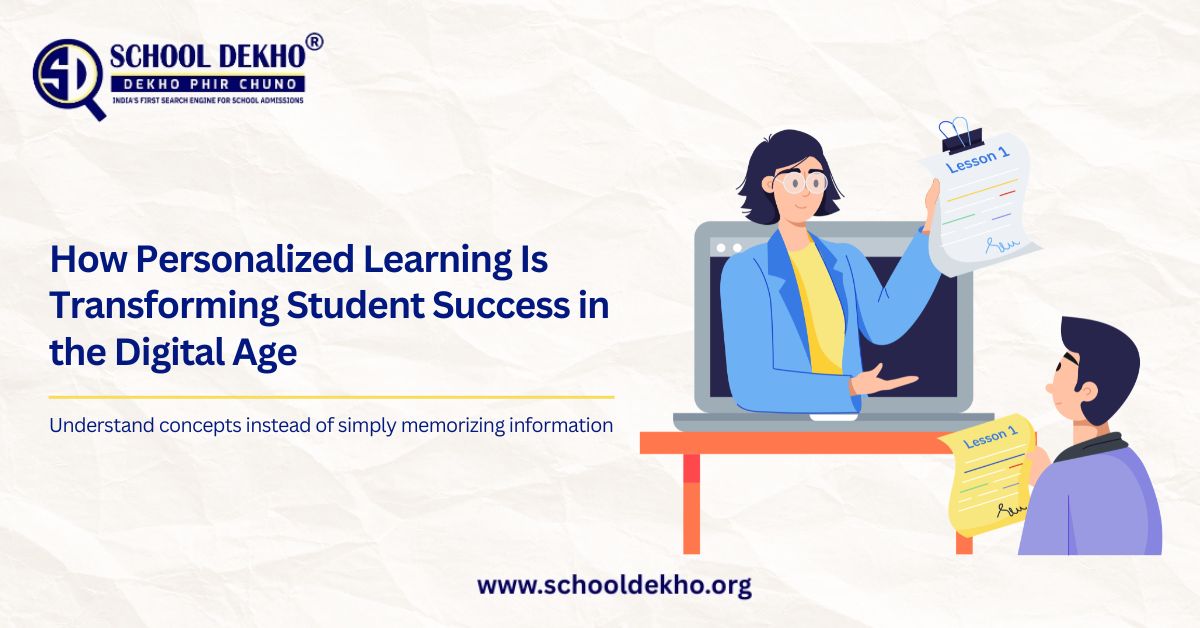
Education has always been about helping students discover their potential, build knowledge, and prepare for the future. While classrooms remain the foundation of learning, the way students learn has changed dramatically over the last decade. Digital technologies, online resources, and interactive learning platforms have made education more accessible than ever before. Yet, despite these advances, one challenge remains unchanged: every student learns differently.
Some students grasp concepts quickly through visual demonstrations, while others need detailed explanations, additional practice, or one-on-one guidance. A teaching method that works perfectly for one learner may not be equally effective for another. This is why personalized learning has become one of the most important trends in modern education.
Rather than expecting every student to follow the same pace and learning style, personalized learning adapts the educational experience to meet individual needs. It empowers students to learn more effectively, develop confidence, and achieve lasting academic success.
What Is Personalized Learning?
Personalized learning is an educational approach that tailors teaching methods, learning pace, and study materials according to each student's strengths, weaknesses, interests, and goals.
Unlike traditional classrooms, where every student typically follows the same lesson plan, personalized learning allows flexibility. Students can spend extra time on challenging topics while moving quickly through areas they already understand.
This approach focuses on helping students truly understand concepts instead of simply memorizing information for examinations.
Why Every Student Learns Differently
Every learner is unique.
Several factors influence how students absorb information, including:
Previous academic experiences
Individual interests
Learning preferences
Confidence levels
Attention span
Study habits
Pace of understanding
For example, one student may understand algebra after solving three problems, while another may need additional examples and visual explanations before feeling confident.
Recognizing these differences is the foundation of personalized education.
Benefits of Personalized Learning
Better Understanding of Concepts
Students often struggle because classroom teaching must follow a fixed schedule.
When a topic moves too quickly, learners may develop gaps in understanding that affect future lessons.
Personalized learning allows students to slow down when necessary and master concepts before progressing.
This deeper understanding creates a stronger academic foundation.
Increased Student Confidence
Many students hesitate to ask questions in a classroom because they fear making mistakes in front of their classmates.
Individualized learning creates a comfortable environment where students feel free to ask questions without embarrassment.
As students begin understanding difficult concepts, their confidence naturally improves.
Confident learners participate more actively, solve problems independently, and approach new challenges with greater enthusiasm.
Learning at the Right Pace
One of the greatest advantages of personalized education is flexibility.
Instead of forcing every student to learn at exactly the same speed, lessons adapt to individual progress.
Students who need additional explanations receive them, while advanced learners can continue exploring more challenging topics without unnecessary repetition.
This balanced approach keeps learning engaging for everyone.
The Role of Technology in Personalized Learning
Technology has made personalized learning more practical than ever before.
Today's students have access to:
Interactive educational platform
Digital whiteboard
Video conferencing
AI-powered study tool
Online assessment
Progress tracking application
These technologies allow teachers and tutors to deliver customized instruction regardless of geographical location.
More importantly, technology supports learning without replacing meaningful human interaction.
One-to-One Online Tutoring Makes Personalization Possible
While educational technology provides excellent resources, many students still benefit from direct interaction with experienced educators.
One-to-one online tutoring offers several advantages:
Individual attention
Customized lesson plans
Immediate feedback
Flexible scheduling
Focused revision
Personalized study strategies
Instead of teaching an entire classroom, tutors concentrate on one student's specific learning needs.
This focused approach often produces faster academic improvement than generalized instruction alone.
Supporting Different Types of Learners
Every student has unique strengths.
Some learn best by:
Watching demonstrations
Listening to explanations
Solving practice problems
Participating in discussions
Working on real-world applications
Personalized learning allows educators to adapt lessons according to these preferences.
This flexibility increases engagement and improves knowledge retention.
Personalized Learning Beyond School
Learning does not end when students leave the classroom.
Homework, revision, projects, and independent study all contribute to academic success.
Many students supplement school education with additional learning resources.
For example, Khan Academy provides free educational content covering mathematics, science, computing, economics, and many other subjects, making it an excellent resource for self-paced learning.
However, self-learning resources cannot always identify why a student is confused or adjust explanations based on individual responses.
Combining self-study with personalized guidance often leads to better outcomes.
The Value of Expert Academic Support
Students sometimes encounter subjects that require additional explanation beyond classroom instruction.
Whether it is advanced mathematics, engineering, programming, or science, personalized academic support helps learners overcome specific challenges more efficiently.
For students seeking guidance in engineering, mathematics, programming, and other STEM disciplines, MEB provides one-to-one online tutoring and homework help tailored to individual academic needs. The personalized approach allows tutors to explain concepts according to each learner's pace rather than following a fixed classroom schedule.
These personalized learning experiences complement classroom education by providing targeted support whenever students need additional help.
Encouraging Independent Learning
One of the goals of personalized learning is to help students become independent learners.
Rather than providing answers directly, effective educators encourage students to:
Think critically
Analyze problems
Explore different solutions
Ask meaningful questions
Reflect on mistakes
These habits prepare students not only for examinations but also for lifelong learning.
Parents Play an Important Role
Parents are valuable partners in a child's educational journey.
They can support personalized learning by:
Creating a regular study schedule
Encouraging curiosity
Celebrating progress instead of perfection
Communicating with teachers
Providing access to quality learning resources
Supporting healthy study habits
When parents, teachers, and students work together, learning becomes more enjoyable and effective.
Preparing Students for the Future
The workplace is changing rapidly.
Future careers require more than memorized facts.
Students need:
Problem-solving abilities
Communication skills
Adaptability
Creativity
Collaboration
Digital literacy
Continuous learning habits
Personalized education develops these skills by encouraging students to understand concepts, ask questions, and think independently.
These qualities remain valuable regardless of future technological changes.
Common Myths About Personalized Learning
Myth 1: Personalized Learning Is Only for Struggling Students
In reality, students of all ability levels benefit from individualized instruction.
Advanced learners can explore challenging topics, while others receive additional support where needed.
Myth 2: Technology Replaces Teachers
Technology is a powerful educational tool, but teachers and tutors continue to play an essential role by motivating students, answering questions, and adapting explanations based on individual needs.
Myth 3: Personalized Learning Is Only Online
Although digital platforms have expanded access, personalized learning can occur in classrooms, tutoring sessions, homeschooling environments, and blended learning models.
Tips for Students to Make the Most of Personalized Learning
Students can maximize their learning experience by:
Setting clear academic goals.
Asking questions whenever they feel confused.
Reviewing lessons regularly.
Practicing consistently instead of cramming.
Seeking help early rather than waiting until examinations.
Using trusted educational resources.
Staying curious and maintaining a positive attitude toward learning.
Small, consistent efforts often produce the greatest long-term results.
Conclusion
Personalized learning is transforming education by recognizing that every student has unique strengths, challenges, and learning preferences. Instead of expecting everyone to progress in exactly the same way, it creates opportunities for learners to study at their own pace, strengthen weak areas, and build genuine confidence.
Technology has made personalized education more accessible than ever, but meaningful human guidance continues to play a vital role. By combining quality classroom teaching, trusted self-learning resources, and individualized academic support when needed, students can develop a deeper understanding of subjects and stronger lifelong learning habits.
As education continues to evolve, personalized learning will remain one of the most effective approaches for helping students achieve academic success and prepare confidently for the opportunities of the future.
.webp)
.webp)