

Maharashtra FDA Bans Junk Food Within 50 Metres of Schools: Full List, Rules, Penalties & Impact on 2 Crore Students
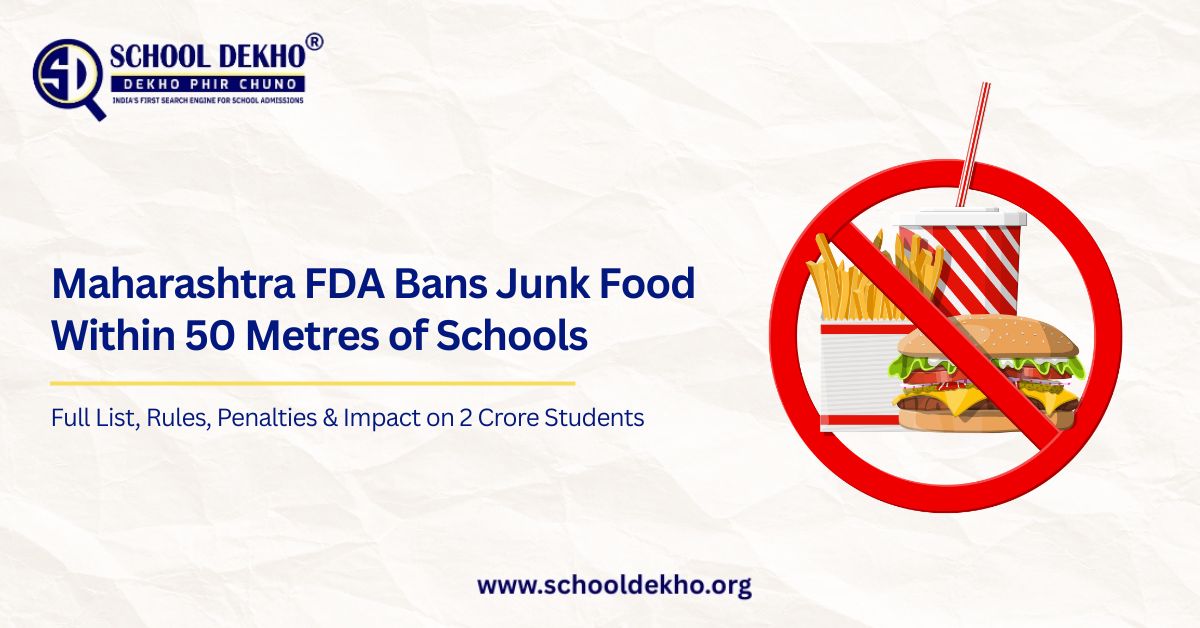
In a landmark decision aimed at safeguarding children's health, the Maharashtra Food and Drug Administration (FDA) has issued a statewide order banning the sale, advertisement, and free distribution of junk food within a 50-metre radius of all school premises. The move is part of the state's ambitious "Safe Food, Safe Maharashtra" campaign and is expected to impact nearly 1.08 lakh schools and approximately 2 crore students across the state.
FDA Commissioner Tukaram Mundhe, who took charge in May
2026, announced the strict enforcement of the order on Wednesday, stating that
the regulations would be implemented without exception across all government,
aided, and private institutions.
What is Banned? The Complete List of Prohibited Items
The ban targets HFSS (High in Fat, Salt, and Sugar) food
items. FDA Commissioner Tukaram Mundhe has made it clear that products with
excess fat, trans fat, and high sugar content are strictly prohibited.
Banned Food Categories Include:
|
Category |
Examples |
|
Fried & Fast Foods |
Samosas, kachoris, bhajiyas, french fries, fried chicken,
vada pav |
|
Bakery & Sweets |
Cakes, pastries, cookies, biscuits, donuts, ice cream,
local sweets, laddoos |
|
Packaged Snacks |
Chips, microwavable popcorn, frozen pizza |
|
Beverages |
Carbonated cold drinks, caffeinated beverages, energy
drinks, sugary drinks |
|
Fats & Spreads |
Vanaspati ghee, stick margarine, non-dairy coffee creamers |
"Cold drinks, chocolate, caffeinated drinks
shouldn't be available in the school and within 50 meters of the school
premise," Mundhe told reporters. When asked about Chinese food
containing ajinomoto, he responded with a firm "no."
Where Does the Ban Apply?
The prohibition extends to:
- Inside
school premises (including canteens, tuck shops, and classrooms)
- Within
a 50-metre radius of school compounds and gates
- School
hostels, Anganwadis, and midday meal kitchens
The order explicitly bans not just the sale but
also the advertisement and free distribution of
junk food within this zone.
Which Schools Are Covered?
The regulations apply uniformly to all educational
institutions in Maharashtra, regardless of their affiliation or
management type:
- Government
schools
- Government-aided
schools
- Private
schools
- Residential
schools
- Schools
affiliated with SSC, HSC, CBSE, ICSE, IB, or any other education board
The order covers children from 22 months of age up
to Class 12 students
Mandatory FSSAI Licences for All Food Operators
A significant component of the FDA's directive is the
mandatory licensing requirement. All food operators serving schools must now
obtain valid Food Safety and Standards Authority of India (FSSAI) licences
and registrations.
This includes:
- School
canteens and tuck shops
- Hostel
kitchens
- Midday
meal (PM-POSHAN) kitchens
- Food
suppliers and contractors
- Anganwadi
centres
Unlicensed operators will not be permitted to supply food to
any educational institution.
Healthier Alternatives: What Schools Must Now Serve
The FDA order doesn't just ban unhealthy food—it actively
mandates the promotion of nutritious alternatives. Schools have been directed
to ensure that canteen menus proactively feature:
- Fruits
and vegetables
- Whole
grains
- Pulses
- Milk
and dairy products
- Locally
available healthy food options
Additionally, schools must ensure:
- Availability
of safe drinking water
- Hygienic
food preparation and storage practices
- Proper
pest control measures
- Effective
waste management systems
Celebrations, Birthdays, and Festivals Under Scanner
In a notable extension of the ban, the FDA has clarified
that enforcement goes beyond regular canteen operations. Schools
have been advised against distributing or serving unhealthy food items during:
- Birthday
celebrations
- Independence
Day
- Diwali
and other festivals
- Any
school events or functions
Mundhe specifically warned schools against
distributing chocolates, samosas, vada pav, and laddoos during
such events, urging them to promote healthier alternatives instead.
Enforcement: Inspections, Audits, and Penalties
The FDA has outlined a comprehensive enforcement framework
to ensure compliance:
Regular Inspections
- The
FDA will conduct surprise food safety audits at every
school twice a year
- At
least one food sample will be collected from each school
annually for testing
- Restaurants,
sweet shops, and food outlets within the 50-metre zone will also be
inspected
Accountability
School managements, principals, and teachers bear primary
responsibility for compliance. Local authorities have also been directed
to ensure adherence to the new norms.
Penalties for Non-Compliance
- Schools
failing to comply with food safety regulations while serving
meals directly to students could lose their affiliation
- The
FDA has warned of strict action against violators
- Repeated
violations may result in de-affiliation of the
institution
"This order will impact every family with
school-going children in the state. Every student must receive safe, wholesome
and nutritious food," Mundhe emphasised.
Why This Ban? The Health Crisis Behind the Decision
The FDA's crackdown comes in response to growing concerns
about childhood obesity, dental problems, and lifestyle diseases among
schoolchildren.
While the central government's Food Safety and
Standards (Safe Food and Balanced Diets for Children in School) Regulations,
2020 came into force in 2021, Mundhe noted that many schools
and stakeholders remain unaware of their responsibilities. The
new order invokes Section 30(1) of the Food Safety and Standards Act,
2006 to enforce compliance.
The Global Parents Teachers Association (GPTA) had
previously warned that easy access to junk food is contributing to rising
health problems among students, noting that "for the last 10
years, Maharashtra's ban on junk food in school canteens has remained largely
on paper."
Tukaram Mundhe's Broader Food Safety Drive
The school junk food ban is part of a larger, aggressive
food safety campaign launched by Commissioner Tukaram Mundhe since taking
office in May 2026.
Key Initiatives Under "Safe Food, Safe
Maharashtra":
- Statewide
Raids: Over 1,100 raids have been conducted,
resulting in the suspension of licences of multiple prominent eateries,
bakeries, and sports clubs across Mumbai due to unhygienic conditions
- 8-Point
"Farm-to-Plate" Guidelines: Issued to curb milk and paneer
adulteration, targeting local chillers, transit networks, and sweet
vendors
- AI-Driven
Grievance Portal: A web portal for citizens to report mislabeled or
adulterated food directly to authorities
- Consumer
Protection: All restaurants must now provide free, safe
drinking water, prohibiting them from forcing customers to buy bottled
water
- School
Food Safety Boards: Schools must establish a Food Safety Board and
appoint a dedicated supervisor to inspect food items
What This Means for Students, Parents, and Vendors
For Students
The ban ensures that children will no longer have easy
access to unhealthy snacks and beverages during school hours, promoting better
eating habits from a young age.
For Parents
Parents can be assured that their children are receiving
safe, nutritious food in school environments. The FDA has made it clear that
parents, teachers, and principals can be held accountable for violations.
For Vendors and Shopkeepers
Local shop owners and street vendors operating within 50
metres of school boundaries must strictly follow these restrictions. Food
business operators must obtain FSSAI licences immediately to continue supplying
to schools.
How to Report Violations
Citizens can report food safety violations through:
- FSSAI
helpline: 1800-114-000
- FDA
Maharashtra toll-free helpline: 1800-222-365
- The
FDA's AI-driven grievance web portal
Conclusion
The Maharashtra FDA's junk food ban marks a significant
shift in the state's approach to children's health and nutrition. By creating
a junk-food-free zone around schools and mandating FSSAI
compliance for all food operators, the FDA is taking concrete steps to
address the growing epidemic of lifestyle diseases among young Indians.
While the ban may face implementation
challenges—particularly with street vendors and small shopkeepers in the
50-metre zone—the FDA's commitment to strict enforcement, regular inspections,
and the threat of de-affiliation signals that this time, the rules are meant to
be followed.
For the 2 crore students in Maharashtra's 1.08 lakh
schools, this could mean the beginning of a healthier, more nutritious future.
Stay Updated: Follow the Maharashtra FDA's official website and social media channels for the complete list of banned items and regular updates on enforcement drives.
Related Posts
-
Why Madhya Pradesh Accounts for Over 50% of India's School Closures
03 Sep-2026, 04:39 PM -
The Benefits of Maintaining High Cleanliness Standards in Educational Spaces
27 Jul-2026, 03:20 PM -

How Student Entrepreneurs Can Build a Professional Presence Early
30 Jun-2026, 08:10 PM -

Choosing an Online MBA Program for Working Adults
30 Jun-2026, 08:07 PM
Search
Latest Posts
-
Why Madhya Pradesh Accounts for Over 50% of India's School Closures
03 Sep-2026, 04:39 PM -
The Benefits of Maintaining High Cleanliness Standards in Educational Spaces
27 Jul-2026, 03:20 PM -
How Student Entrepreneurs Can Build a Professional Presence Early
30 Jun-2026, 08:10 PM -
Choosing an Online MBA Program for Working Adults
30 Jun-2026, 08:07 PM
.webp)
.webp)