
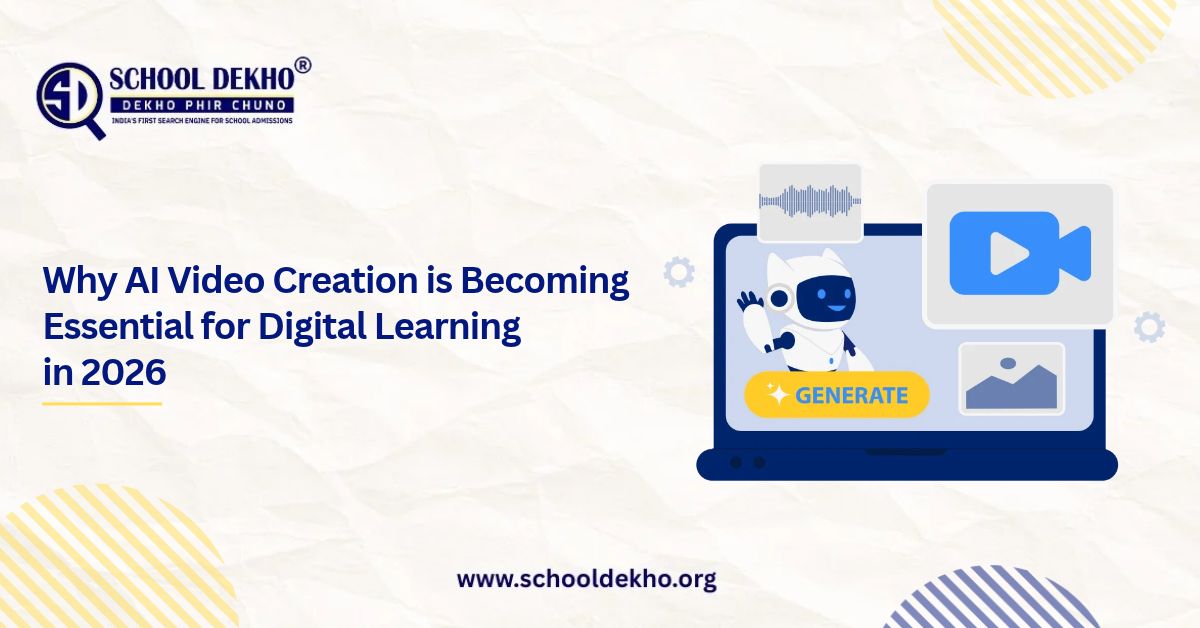
Digital learning has moved far beyond recorded lectures and static presentation slides. Students now expect lessons to be visual, concise, interactive, and available whenever they need them. At the same time, teachers and education teams are under pressure to produce more material for different subjects, age groups, languages, and learning needs. This combination is accelerating the use of artificial intelligence in video production. AI video tools can turn lesson plans, scripts, images, and research notes into useful visual content without requiring a full production studio.
The change is not simply about making classrooms more entertaining. Video can demonstrate processes that are difficult to explain with text alone, from the steps in a science experiment to the structure of a historical event. It can also help learners revisit a concept at their own pace. When educators use AI responsibly, they can reduce repetitive production work and spend more time on lesson design, feedback, and student support.
Why Video Fits Modern Learning Habits
Many learners already use short videos to discover ideas, solve practical problems, and review unfamiliar topics. Educational institutions can respond to this habit without turning every lesson into social media content. The more useful approach is to borrow the clarity and strong pacing of modern video while preserving academic depth. A well-designed three-minute explanation can introduce a concept, while a longer video can guide students through examples, discussion questions, and reflection.
Video also supports a wider range of learning preferences. Some students understand an idea after reading it, while others benefit from narration, diagrams, captions, demonstrations, or repeated examples. AI-assisted production makes it easier to combine these elements. A single written lesson can become a narrated explainer, a revision clip, a visual glossary, and a subtitled version for learners who need accessibility support.
Faster Production Without a Large Studio
Traditional video production often involves cameras, microphones, presenters, editing software, and several rounds of coordination. Those resources remain valuable for major courses and institutional campaigns, but they are not practical for every weekly lesson. A modern AI video creation platform can help educators transform an approved script into a first draft with scenes, narration, visual elements, and transitions. The teacher still controls the educational message, but the technical starting point arrives much faster.
This faster workflow is especially helpful when information changes frequently. Career guidance, technology courses, exam instructions, and school announcements may need regular updates. Instead of reshooting an entire video, a content team can revise the script and regenerate only the affected sections. This makes video a realistic format for timely communication rather than a resource reserved for projects planned months in advance.
Speed should not be confused with automatic quality. The best results come from a clear workflow: define the learning objective, write a focused script, generate the draft, check every factual statement, review the visuals, and test the final video with a small audience. AI shortens production, but educators remain responsible for accuracy, tone, context, and age appropriateness.
From Static Images to Dynamic Explanations
Schools and course creators already have large collections of diagrams, illustrations, archive photos, maps, and presentation graphics. AI can help turn those assets into motion-based explanations. A still image of the water cycle, for example, can become a sequence that highlights evaporation, condensation, and precipitation. A historical photograph can be placed in a narrated timeline. A product-design sketch can become part of a visual case study.
For teams working with limited resources, an AI image to video generator free no sign up option can be a practical way to test a concept before committing to a larger production workflow. A teacher can explore how movement, framing, and narration affect comprehension, then decide whether the idea deserves a complete lesson video. The goal is not to animate every image, but to use motion when it clarifies sequence, change, comparison, or cause and effect.
Dynamic visuals can also make student projects more expressive. Learners might create short explainers from their own illustrations, convert a research poster into a narrated presentation, or build a visual summary of a book. These assignments encourage students to make decisions about structure, evidence, and audience. The finished video becomes the result of their reasoning, not merely an automated output.
Personalization and Multilingual Learning
One of the strongest opportunities for AI video is the ability to adapt a core lesson for different audiences. The same concept may require simpler language for younger students, more examples for beginners, or a faster review version for advanced learners. Educators can create these variations from a shared source script while keeping the central facts and learning outcomes consistent.
Multilingual production is another important use case. Schools serving international communities often need content in several languages, but translation and recording can be expensive. AI-assisted narration and captioning can make localization more accessible. However, human review is essential. A fluent reviewer should check terminology, pronunciation, cultural references, and whether the translated version communicates the same meaning as the original.
Accessibility should be part of the process from the beginning. Captions need to be accurate and synchronized. Important visual information should also be explained through narration or text. Fonts, colors, pacing, and contrast should remain readable on both large classroom displays and small mobile screens. When these choices are planned early, AI video can support more learners instead of creating new barriers.
Keeping Teachers in Control
AI-generated educational media should never be published without review. Systems can produce incorrect facts, misleading images, awkward phrasing, or examples that do not match the curriculum. Teachers and subject specialists should verify the script, visual sequence, citations, and final message. If a video includes statistics or scientific claims, the source and publication date should be documented.
Schools should also create simple rules for privacy and consent. Personal student data should not be entered into public AI tools. Student faces, voices, and original work should only be used according to school policy and local regulations. If synthetic presenters or voices appear in a video, learners should understand that the media was generated or modified with AI. Transparency builds trust and helps students develop stronger media literacy.
Copyright deserves the same attention. Educators should use original, licensed, or clearly permitted source materials. AI generation does not remove the responsibility to check whether an image, logo, soundtrack, or excerpt can be used. A consistent review checklist can prevent most problems before publication.
A Practical Classroom Workflow
A reliable AI video project can begin with five questions. What should learners understand after watching? What evidence or example will make the idea clear? Which visuals genuinely support the explanation? How will the teacher confirm accuracy? What activity will students complete afterward? These questions keep the technology aligned with teaching rather than allowing novelty to drive the lesson.
Next, the educator can write a short script using plain language and one main idea per section. The first generated version should be treated as a prototype. Reviewers can shorten slow passages, replace generic visuals, correct pronunciation, and add captions. After a small classroom test, the teacher can ask whether students understood the concept and which sections caused confusion. Those observations should guide the final edit.
Schools do not need to transform every subject at once. A sensible pilot might focus on revision summaries, parent information, safety procedures, or lessons that students regularly find difficult. The team can track production time, completion rates, quiz performance, and student feedback. If the videos improve learning without creating an unreasonable review burden, the workflow can expand gradually.
The Future Is Collaborative, Not Fully Automated
The most valuable role of AI in education is not to replace teachers or creative teams. It is to remove some of the technical friction between a strong idea and a clear visual explanation. Teachers contribute subject knowledge, empathy, classroom awareness, and judgment. AI contributes speed, formatting options, visual experimentation, and repeatable production support.
In 2026, schools that benefit most from AI video will be those that combine innovation with careful standards. They will use the technology to make lessons clearer, more accessible, and easier to update while maintaining human review at every important stage. The result will not be an endless stream of automated content. It will be a more flexible learning environment in which educators can communicate complex ideas through the format that serves students best.
.webp)
.webp)