
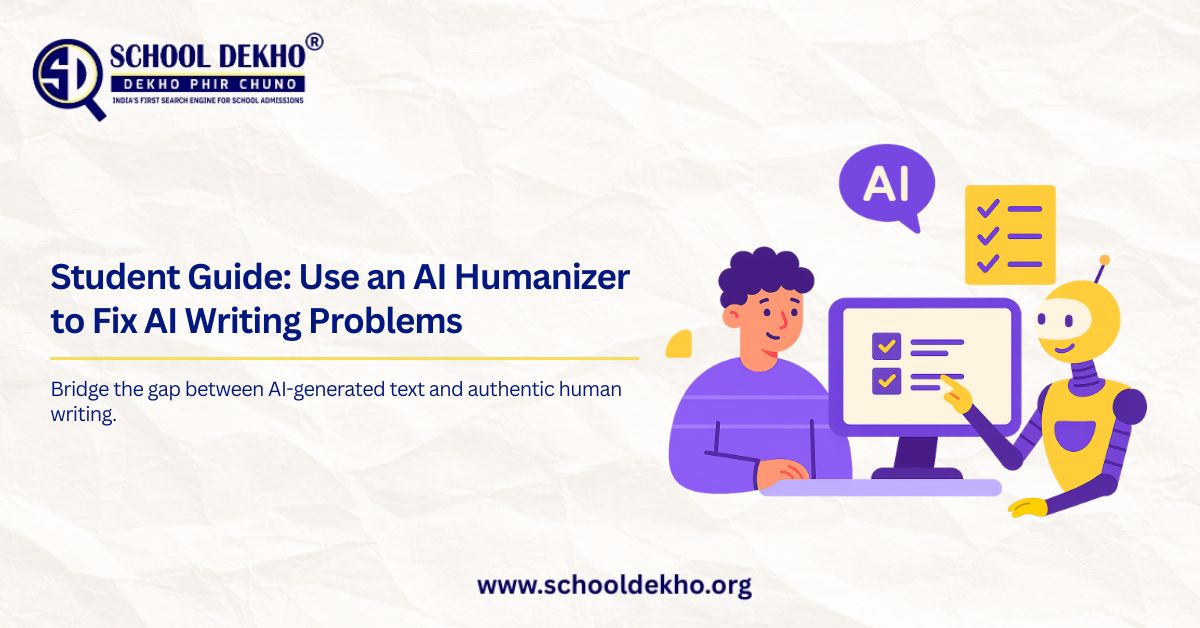
Artificial intelligence has really altered how students approach their assignments now. It can do a lot, from giving you ideas for essays to just drafting out the first version, these AI writing tools are certainly saving people time and maybe even reducing some stress. But, it is not long before many students find another problem, which is that the text from AI sometimes just sounds robotic. Or it can be repetitive, even unnatural. Sometimes, it is even picked up by those AI detection programs.
So, that is where an AI humanizer comes in handy. You do not have to rewrite the whole assignment yourself from the start. Instead, students can put the machine-generated text t͏hrough one of these humanizers, which makes it sound more natural and engaging, just more readable. The whole point here is not to cheat, but actually to make things clearer and easier to read. And, it helps in maintaining originality too, all w͏hile keeping the student’s own thoughts central to what they are doing.
Why AI Writing Can Be a Problem
AI writing tools are excellent for brainstorming and drafting content, but they are not perfect. They often produce sentences that:
Sound repetitive or overly formal.
Use the same sentence structure repeatedly.
Include unnecessary filler words.
Lack a personal or natural writing style.
Feel generic instead of specific.
Teachers and professors expect assignments to reflect a student's understanding and unique voice. Even if the information is correct, robotic writing can make your work less convincing and harder to read.
What Is an AI Humanizer?
An AI humanizer is a tool designed to rewrite AI-generated content so it reads more like it was written by a person. It improves sentence flow, replaces awkward wording, and creates a more natural tone without changing the original meaning.
Rather than simply swapping words with synonyms, a good AI humanizer restructures sentences, improves transitions, and makes the content easier to understand. The result is writing that feels smoother and more authentic.
How Students Can Benefit
Employing an AI humanizer provides quite a few benefits for students, you know.
For one thing, there is better readability.
Natural wr͏iting, it is just simpler for teachers to really follow along. A humanized article, it moves along in a logical way from one thought to the next, which can make your points stronger and more convincing overall.
Then there is the improved learning aspect.
When you review humanized content, this also helps you get better at writing. By looking at the first AI draft and then seeing the updated version, you actually learn about how to improve things like sentence variety, choosing words, and how to put paragraphs together.
It also helps to save time.
A lot of students, they have numerous assignments, plus quizzes and projects every week to finish. An AI humanizer, it cuts down on the time you spend trying to fix awkward text that the AI made. This frees you up, allowing focus on research and more critical thinking.
And it also helps with a professional tone.
Regardless if you are writing an essay, or maybe a scholarship application, or even a project report, having a polished writing style, it just makes a much better impression. Humanized content tends to come across as more confident, and generally more professional too.
Best Practices for Students

An AI humanizer should be part of your writing process—not the entire process. Follow these simple steps for better results.
Start with your own ideas. Use AI to organize your thoughts or create a rough outline, but make sure the content reflects your understanding of the topic.
Review every sentence. Never submit text without reading it carefully. Check facts, grammar, and formatting before turning in your assignment.
Add personal examples. Including your own experiences or classroom knowledge makes your writing more authentic and meaningful.
Keep your voice. The goal is to make your writing sound natural, not to completely change your style.
Follow academic guidelines. If your school has rules about using AI tools, always follow them. Use AI responsibly as a learning aid rather than a replacement for your own work.
Common Mistakes to Avoid
Some students rely too heavily on AI-generated content without editing it. This can lead to factual errors, repetitive language, or writing that doesn't match the assignment requirements.
Another common mistake is assuming an AI humanizer automatically produces perfect content. While these tools can greatly improve readability, they still require human review. Always verify information, correct any mistakes, and ensure the final version accurately represents your knowledge.
Choosing the Right AI Humanizer
Not every AI humanizer delivers the same quality. Look for a tool that:
Produces natural, fluent writing.
Preserves the original meaning.
Supports multiple writing styles.
Corrects grammar and awkward phrasing.
Is easy to use and works quickly.
Testing different tools with a short paragraph can help you find one that matches your writing needs.
Final Thoughts
AI writing tools have become valuable resources for students, but they work best when combined with thoughtful editing. An AI humanizer helps bridge the gap between machine-generated text and authentic human writing by improving readability, tone, and flow.
Remember that the strongest assignments still come from your own ideas, research, and critical thinking. Use AI to support your learning—not replace it. When used responsibly, an AI humanizer can help you produce clearer, more engaging assignments while continuing to develop your writing skills for future academic and professional success.
.webp)
.webp)