
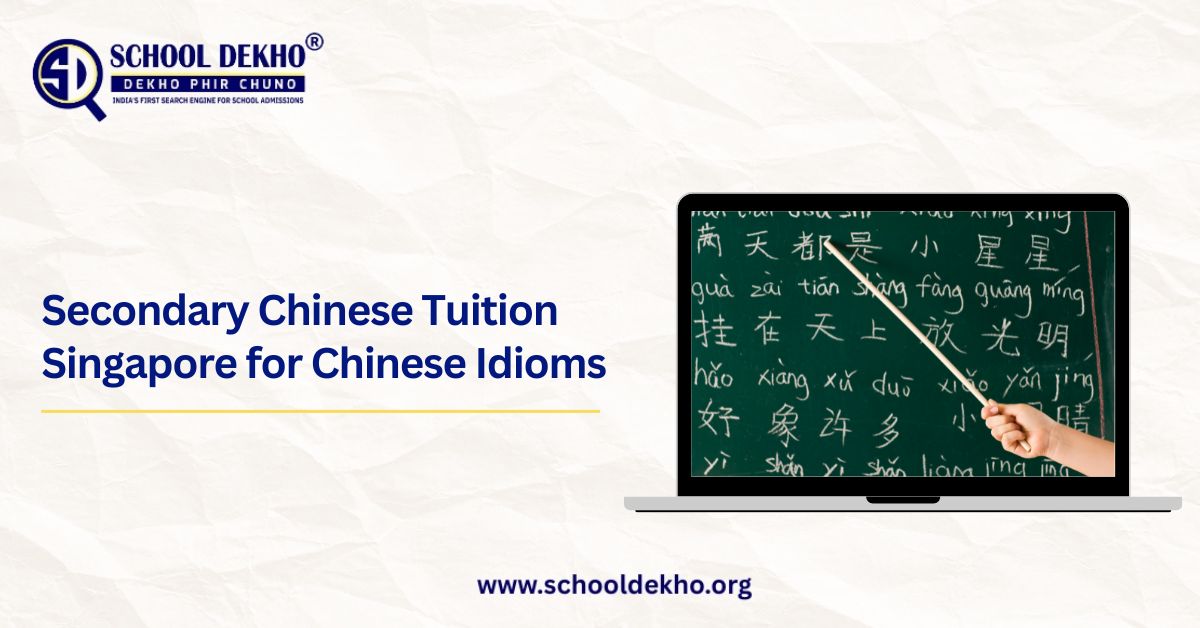
Chinese idioms are an essential part of learning the language, particularly for secondary school students in Singapore. They appear in comprehension passages, composition writing, oral examinations and everyday communication. However, many students struggle to remember idioms because they often memorise meanings without understanding the stories, context and emotions behind them.
Secondary Chinese Tuition Singapore provides a more engaging and structured way for students to understand Chinese idioms naturally. Instead of relying on rote learning, experienced tutors help students discover how idioms are used in real-life situations, making them easier to remember and apply confidently during examinations and daily conversations.
Why Chinese Idioms Matter in Secondary School
Chinese idioms, commonly known as chengyu (成语), are much more than colourful expressions. They represent centuries of Chinese history, literature and culture. Each idiom often contains only four characters, yet it conveys a deep meaning or life lesson.
In Singapore's secondary Chinese curriculum, students encounter idioms in many areas of assessment. These include:
Reading comprehension passages
Situational writing
Continuous composition
Oral communication
Listening comprehension
Classroom discussions
Students who understand idioms well can communicate more naturally and produce richer, more expressive writing. They also develop stronger reading comprehension skills because they can interpret figurative language more accurately.
Why Students Often Find Chinese Idioms Difficult
Many students understand individual Chinese characters but struggle when those characters combine to form an idiom with a completely different meaning.
Common challenges include:
These difficulties become more noticeable as students progress through secondary school because examination questions require deeper language understanding rather than simple memorisation.
Learning Idioms Through Stories Makes Them Memorable
One of the most effective teaching approaches is learning the historical stories behind each idiom.
Many Chinese idioms originate from famous battles, philosophers, historical figures or traditional literature. Once students understand the background, the meaning becomes much easier to remember.
For example, instead of simply memorising an idiom's definition, students learn:
The historical event that inspired it
The characters involved
The lesson or moral behind the story
How it applies in modern life
This storytelling approach transforms learning from mechanical memorisation into meaningful understanding.
How Secondary Chinese Tuition Encourages Natural Learning
Quality tuition focuses on helping students experience the language rather than simply preparing for tests.
Lessons often include:
Context-Based Learning
Instead of teaching isolated vocabulary lists, tutors introduce idioms within stories, articles and conversations.
Students learn:
When an idiom is appropriate
Which situations require formal or informal language
How the same idiom can express different emotions depending on context
This approach develops genuine language intuition.
Interactive Discussions
Students remember more when they actively participate.
During lessons, tutors may encourage students to:
Explain idioms in their own words
Create original sentences
Discuss current events using appropriate idioms
Compare similar expressions
Active learning improves long-term retention.
Reading Authentic Chinese Materials
Exposure plays a significant role in language acquisition.
Students may read:
Newspaper articles
Short stories
Chinese literature
Magazine features
Educational passages
Repeated exposure helps idioms become familiar rather than intimidating.
The Role of Writing Practice
Understanding an idiom is only the first step. Students also need opportunities to use it correctly.
Regular writing exercises allow students to apply new expressions naturally.
Effective writing practice includes:
Narrative compositions
Reflective essays
Descriptive writing
Situational writing
Personal responses
Tutors provide constructive feedback on whether each idiom fits the context appropriately rather than simply correcting grammar.
This helps students build confidence while improving language accuracy.
Improving Oral Communication with Idioms
Chinese oral examinations assess much more than pronunciation.
Students who naturally incorporate suitable idioms demonstrate:
Better vocabulary
Greater fluency
Stronger language awareness
Higher confidence
During guided discussions, tutors often encourage students to explain opinions using expressive language instead of relying on simple vocabulary.
For example, students gradually replace repetitive words with richer expressions that make conversations more engaging.
Building Confidence Through Regular Practice
Confidence grows when students experience consistent success.
Effective tuition programmes usually include regular revision through:
Weekly vocabulary reviews
Short quizzes
Speaking exercises
Reading discussions
Composition corrections
Rather than overwhelming students with hundreds of idioms, tutors introduce manageable groups that can be reviewed regularly.
This spaced learning approach improves long-term memory and reduces exam stress.
Connecting Idioms to Everyday Life
One reason students forget idioms is that they only encounter them during revision.
Strong tuition programmes encourage students to notice idioms outside the classroom.
Examples include:
Watching Chinese television programmes
Reading age-appropriate novels
Following current affairs in Chinese
Listening to podcasts
Discussing family experiences using suitable expressions
When students connect language with real experiences, learning becomes much more meaningful.
Supporting Different Learning Styles
Every student learns differently.
Some remember through visual examples, while others benefit from listening or writing repeatedly.
Experienced tutors often adapt lessons by using:
Mind maps
Storyboards
Role-playing activities
Vocabulary games
Memory association techniques
Visual illustrations
These varied teaching methods help students remain engaged and cater to different strengths.
How Parents Can Reinforce Learning at Home
Parents do not need to be fluent in Chinese to support their children's progress. Simple habits can make a meaningful difference.
These include:
Encouraging daily Chinese reading
Discussing new vocabulary after school
Watching Chinese educational programmes together
Asking children to explain newly learned idioms
Praising effort rather than perfection
Creating a positive learning environment helps students develop lasting motivation.
Choosing the Right Tuition Programme
Parents should look beyond examination results when selecting a tuition provider.
Consider whether lessons focus on:
Understanding rather than memorisation
Regular speaking opportunities
Personalised feedback
Structured vocabulary development
Engaging teaching methods
Consistent revision strategies
Many families appreciate learning environments where students feel comfortable asking questions and making mistakes as part of the learning process.
Preparing for Long-Term Success
Learning Chinese idioms is not only about scoring well in examinations. It also strengthens communication, cultural appreciation and critical thinking.
Students who understand idioms naturally often become more confident readers, better writers and more expressive speakers. They are also more likely to enjoy learning Chinese because the language feels meaningful rather than difficult.
With consistent guidance, engaging lessons and regular practice, students can gradually build a rich vocabulary that supports both academic achievement and lifelong language skills.
Final Thoughts
Mastering Chinese idioms requires patience, consistent exposure and meaningful practice. Rather than memorising lists of expressions, students benefit most when they understand the stories, contexts and cultural significance behind each idiom. Secondary Chinese Tuition Singapore provides structured opportunities to develop these skills through interactive learning, practical application and personalised guidance. Over time, students become more confident in comprehension, writing and oral communication, laying a strong foundation for future success in the Chinese language.
With regular practice, personalised guidance and engaging lessons, students can develop lasting confidence and achieve steady academic improvement throughout their secondary school years. This strong foundation not only prepares students for examinations but also encourages a lifelong appreciation of the Chinese language and its rich cultural heritage.



.webp)
.webp)