
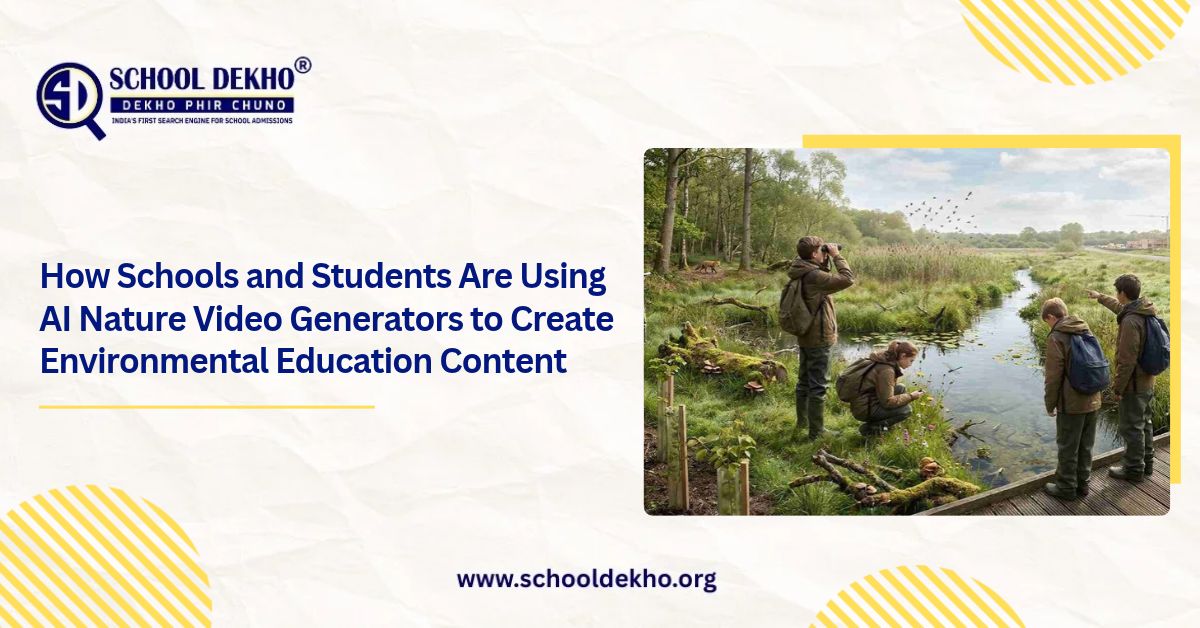
Every CBSE-affiliated school in India is now required to run an Eco Club for Mission LiFE, organizing activities across seven core themes, saving energy, saving water, reducing waste, and more, as part of NEP 2020's push to build genuine environmental awareness among students. An AI Nature Video Generator, a part of Higgsfield being one worth knowing about, is becoming part of how schools and students extend these existing awareness efforts into video content.
Why Has Environmental Education Become Such a Structured Priority in Indian Schools?
This isn't a loosely encouraged extracurricular anymore, it's a genuine, mandated part of school life. The National Education Policy 2020 specifically emphasizes integrating environmental awareness and sustainability principles into school curricula, and CBSE has directed all affiliated schools to establish and actively run Eco Clubs, recently rebranded as Eco Clubs for Mission LiFE, organized around seven specific themes that every student is meant to genuinely engage with.
This shift matters for schools genuinely trying to comply thoroughly rather than superficially. Government data has shown that Eco Club establishment across schools has historically been uneven, with only around half of Delhi schools having active Eco Clubs as of the 2023-24 academic year before the renewed Mission LiFE push, which is part of why the government has since developed a dedicated monitoring portal and directed District Plantation Committees to oversee compliance more closely going forward across the country.
What Kinds of Activities Do Eco Clubs Already Run That Video Content Could Extend?
Real, government-documented Eco Club activities already include poster-making, painting, role play, nukkad natak (street theater), essay writing, and slogan competitions, all genuinely creative formats students already use to communicate environmental messages. Tree plantation drives, waste segregation projects, and water conservation initiatives round out the practical, hands-on side of this work, with schools regularly documenting these activities for awareness campaigns within their communities.
This existing creative infrastructure matters considerably, since it means video content isn't being introduced into a vacuum. Students already write essays and slogans about water conservation, already perform street theater about waste segregation, and already design posters about the seven Mission LiFE themes. Video is a natural next format for exactly the same kind of content students are already comfortable creating, rather than an entirely new skill or activity a school would need to introduce from scratch.
Why Does Video Specifically Add Something These Existing Formats Don't?
A poster or a slogan communicates a single message effectively, but video can show an actual process unfolding, how a compost pit is built and works over time, how a rainwater harvesting system actually functions, what a specific local ecosystem being studied by an eco club actually looks like in motion. That dynamic, process-based quality is genuinely harder to communicate through the static formats eco clubs have traditionally relied on, no matter how well-designed those posters and slogans might be.
This matters especially for the more technical Mission LiFE themes that are harder to convey through a poster alone. Explaining what "reducing e-waste" actually means in practice, or showing the genuine step-by-step process behind proper waste segregation, benefits enormously from being shown as a sequence rather than summarized in a single static image or slogan, since students can actually follow along with the real process rather than inferring it from a snapshot.
What Happens When Genuinely Valuable Environmental Education Content Never Gets Made?
This is a real, common gap in how eco club activities get documented and shared. A tree plantation drive or a genuinely well-designed awareness campaign might happen once, get photographed for a school newsletter, and then largely disappear from circulation, even though the actual educational content, the specific environmental facts and practices being taught, would genuinely benefit other classes, other schools, or the same students revisiting the material later in the year.
This gap tends to be most pronounced with older eco club activities from previous academic years. A well-executed water conservation campaign from two years ago, even if it was genuinely effective at the time, rarely gets revisited or reused for a new batch of students, meaning each new cohort essentially starts from scratch rather than building on the school's own accumulated environmental education content from past initiatives.
What Are the Traditional Options for Creating Environmental Education Video Content?
Filming activities directly with a smartphone during an actual eco club event is the most common approach, capturing real students doing real activities, genuinely valuable but often producing raw, unedited footage that isn't especially engaging or informative on its own. Creating narrated slideshow-style videos using presentation software is the more common alternative for explaining concepts rather than documenting events, functional but often visually flat compared to more polished educational content, and requires real time to assemble even a modest set of slides.
Where Do These Traditional Options Fall Short for a Teacher or Student Organizer?
The constraint is production time and skill relative to how many environmental topics genuinely deserve coverage across a school year, seven Mission LiFE themes, seasonal plantation drives, World Environment Day activities, and more. A teacher or student eco club leader already managing the actual environmental activities themselves has limited time left over to also produce polished video content explaining each one properly.
This time constraint tends to force an uncomfortable prioritization in practice. A school might manage genuinely thorough video documentation for a single flagship event, like a large World Environment Day plantation drive, while several of the seven Mission LiFE themes receive only a poster or a brief mention throughout the rest of the year, simply because there wasn't enough remaining time or production capacity to give every theme the same level of engaging, well-produced attention.
How Does This Kind of Tool Actually Fit Into an Eco Club's Work?
AI Nature Video Generator lets a student or teacher describe a specific environmental concept or process, such as water conservation, a local ecosystem, or sustainable waste management, and produce a clear, engaging video within minutes, without needing video editing skills or professional equipment. For an eco club covering multiple Mission LiFE themes across a school year, that speed makes it realistic to produce genuinely engaging video content for each theme rather than relying only on posters and one-off event photos.
This changes the prioritization problem described earlier in a genuinely meaningful way. Rather than concentrating all available production effort into a single flagship event each year, an eco club can realistically produce reasonably polished video content across all seven Mission LiFE themes, giving every theme comparable attention rather than letting a few dominate simply because they happened to align with the one event the school had time to properly document.
What Must Stay Scientifically Accurate in Any Environmental Content Shown to Students?
This is the single most important point in this entire article. Every environmental fact, ecological process, or scientific claim presented has to be genuinely accurate, since environmental education exists specifically to build real understanding and correct habits, not just visual awareness. An AI Nature Video Generator should be used to visually present environmental concepts and facts a teacher or student has already verified against a reliable source, never to generate environmental content without confirming its scientific accuracy first. Given that this content is meant to shape how students actually understand and interact with the natural world going forward, an inaccurate but visually appealing video does genuine harm to the exact educational goal it's meant to support in the long run.
What Can a School Actually Build Beyond a Single Environmental Video?
Beyond one video, the same approach can support a consistent library of content covering all seven Mission LiFE themes across an entire academic year, giving a school genuinely comprehensive environmental education material rather than content concentrated around just one or two flagship events. This kind of thorough, well-organized approach to student wellbeing and school life fits naturally alongside broader school priorities, similar to how genuine attention to maintaining high cleanliness standards reflects a school's overall commitment to a healthy, well-run learning environment that parents and students genuinely notice and appreciate over time. AI is a native AI creative suite, which offers advanced AI image, video, and voice generation, editing, and upscaling tools. This means a school could also produce supporting posters or graphics for the same environmental campaign from one workspace.
Does This Replace the Actual Environmental Work Eco Clubs Are Meant to Do?
No, and this matters as much here as anywhere. What actually fulfills the goals of NEP 2020 and mission life is real, hands-on student participation, actual tree plantation, genuine waste segregation practices, and real behavior change around water and energy use. An AI Nature Video Generator, whether Higgsfield or a comparable platform, speeds up communicating and reinforcing that work through engaging video content. It does not plant a single tree, verify a scientific fact, or replace the genuine, hands-on environmental action that's the entire point of the Mission LiFE framework in the first place.
What Should a School or Student Look for Before Using This Kind of Tool?
A few practical things matter here specifically. Verifying environmental facts against a reliable source, a science teacher, or a government environmental education resource, before creating any content matters most, given the educational stakes involved for the students who will eventually watch it. Matching content to the specific Mission LiFE theme or eco club activity already underway helps reinforce the actual curriculum rather than introducing a disconnected topic. And keeping content genuinely age-appropriate for the specific grade level matters given how much environmental concepts vary in complexity across primary and secondary education.
What Are the Key Takeaways for Schools Considering This Approach?
Environmental education is now a genuinely mandated, structured part of Indian school life under NEP 2020 and CBSE's Eco Clubs for Mission LiFE, not just an optional extracurricular activity left to individual schools.
Eco clubs already run genuinely creative activities, posters, street theater, slogan competitions that video content can naturally extend rather than replace or compete with for student attention.
An AI Nature Video Generator helps schools produce engaging environmental video content across all seven Mission LiFE themes without the production time full video editing traditionally requires from busy teachers or student volunteers.
Every environmental fact or process shown to students must be genuinely accurate. Content that undermines correct environmental understanding works directly against the educational goal it's meant to support in the first place.
What Are Some Frequently Asked Questions About AI Nature Video Generators for Environmental Education?
Can an AI Nature Video Generator verify whether an environmental fact is actually accurate?
No, and it shouldn't be relied on for this. Verifying environmental facts and scientific claims against a reliable source, like a science teacher or a government environmental resource, is entirely the creator's responsibility before content is made, and this step should never be skipped regardless of how polished the finished video turns out to be.
Will AI-generated environmental content feel less authentic than actual event footage?
Not necessarily. Event footage and AI-generated explainer content serve different purposes, documenting what actually happened versus clearly explaining a concept or process, and both have genuine value in a well-rounded eco club program that aims to both act and educate at the same time.
Do students need video production experience to create this kind of content?
No. Describing the specific environmental concept or process, along with verified facts, in plain language is enough to produce a usable educational video without prior production experience or specialized editing software knowledge of any kind.
Is this only useful for CBSE schools, or does it help other boards too?
It helps any school running environmental education content, regardless of board, since the underlying need, communicating environmental concepts clearly and engagingly to students, applies broadly across Indian education rather than being specific to any single curriculum.


.webp)
.webp)